
Government Report - September 2026
AI and privacy regulation took center stage in July, as states advanced new rules around AI-generated advertising, synthetic performers and consumer data. AAF continues advocating for clear, consistent standards that protect consumers while giving advertisers a workable regulatory framework.
September 2026 Report
AI transparency, youth privacy and consumer data protections dominated September’s legislative updates. From new disclosure requirements for AI-generated performers to proposed restrictions on targeted advertising and personalized pricing, AAF continues to advocate for policies that protect consumers while supporting innovation and responsible advertising practices.
Plan Now for Advertising Day on the Hill:
March 11, 2027
Registration is now open for AAF’s Advertising Day on the Hill in Washington, DC. Join our vital grassroots network in demonstrating the advertising industry's power and passion directly to federal lawmakers. This exciting event is uniquely structured so every attendee's experience is tailored to them. To ensure your voice is heard loud and clear, the AAF will provide you with personalized talking points and specific questions prepared ahead of time for your scheduled meetings with your Representatives, Senators, and/or their staff. By participating in these individualized Hill visits, you will play a crucial role in delivering an informed, relevant, and highly impactful message that protects and advances our industry.
Reserve Your Spot Today
Federal Activity
Federal regulatory and legislative bodies intensified their focus on the advertising industry throughout August and September 2026, specifically targeting artificial intelligence applications and youth data protections.
U.S. Congress
The House is considering a new bipartisan bill similar to the Senate’s stalled Kids Off Social Media Act. The 16 & Up Social Media Act, would prohibit companies from using algorithmic “targeting” on users under 17. Meanwhile, on August 5th, the Senate Commerce Committee advanced a major legislative package containing the Kids Online Safety Act (KOSA) and the Children and Teens' Online Privacy Protection Act (COPPA 2.0). If passed by the full Congress, COPPA 2.0 would fundamentally alter digital marketing by extending strict privacy rules to teens under 18 and completely ban the use of personal data for individual-specific, targeted advertising directed at minors.
While federal discussions around data and ad taxes remained stalled in favor of state-level tax initiatives, this sweeping federal push for AI transparency and data minimization ensures that the programmatic advertising landscape faces an era of much tighter regulatory compliance.
Federal Agencies
On August 19th, the Federal Trade Commission (FTC) introduced a groundbreaking proposed enforcement policy addressing AI-driven personalized pricing. This specific federal policy warns brands that leveraging automated profiling to dynamically alter product prices without explicit disclosures constitutes an illegal trade practice. AAF submitted comments on the proposal, highlighting its potential effects on the advertising industry.
Meanwhile, federal agency oversight hit a milestone on August 27, 2026, when the FTC finalized a $930,000 settlement with Cox Media Group and two marketing firms over deceptive "Active Listening" AI claims. The agency alleged these companies misled advertising clients by falsely promising an algorithmic service could capture live smart-device conversations for hyper-localized ad targeting.
State Activity
Late summer brought the most consequential stretch of the 2025–2026 state legislative cycle for our industry. Delaware enacted a significant privacy-law update, and California's Legislature closed its two-year session on August 31 by sending a wave of AI-, advertising-, and data-privacy bills to Governor Newsom's desk. Several other bills stalled in committee or died when their sessions adjourned. Below is a summary of what happened, what's pending, and what to watch in the weeks ahead.
Signed Into Law
California: AI “Performers” in Ads On September 16, Governor Gavin Newsom signed into law a bill requiring a "clear and conspicuous disclosure" whenever an ad prominently features an AI-generated "synthetic performer" — a digital figure that gives the realistic impression of a human performance without representing an identifiable real person. The new law closely mirrors New York's new law, which went into effect on June 9, and which similarly requires advertisers to disclose the use of digitally created "synthetic performers" in ads. Both laws exempt expressive works, like films and video games, when the performer's use matches his or her role in the underlying work. The key difference: New York's duty kicks in when the advertiser has actual knowledge a synthetic performer is used, while California's version drops that knowledge qualifier. Read the industry coalition response here.
Delaware: HB 380 Delaware Personal Data Privacy Act (DPDPA)
Amendments (signed 9/2/2026, effective 1/1/2027).
The bill significantly tightens state privacy rules, forcing the advertising industry to change how it handles consumer data, vendor contracts, and tracking tools.
New Jersey: Anti-Surveillance Pricing Enacted
Bill & Status: Assembly Bill 4085 (The "Fair Price Protection Act")
Final Action: Enacted and approved into law on July 23, 2026.
Impact on Advertisers: This law explicitly prohibits businesses from using a consumer's automated or personal data—such as precise geolocation data or specific purchase history—to dynamically alter or differentiate grocery prices through automated retail systems. It mandates a strict one-year moratorium on installing new electronic shelving labels pending a state-led economic study. Standard promotional loyalty programs remain permissible provided clear and conspicuous disclosures are extended to consumers.
Hawaii: Strict New Protections Against Unauthorized AI Replicas & Companions
Bill & Status: House Bill 2137 (Act 247) and Senate Bill 3001 (Act 248)
Final Action: Both pieces of legislation were signed into law by the Governor on July 14, 2026.Impact on Advertisers (HB 2137): This statute directly outlaws the intentional publication or generation of realistic, AI-generated digital likenesses or voice imitations of individuals within commercial advertising campaigns without express, written consent. It establishes explicit civil remedies and statutory damages for affected parties, though it carves out explicit protections for media platform hosts and traditional parodies.
Impact on Advertisers (SB 3001): Imposes stringent disclosure requirements on AI "companion" platforms. The law forces platforms to issue persistent notices to minor users ensuring they understand they are talking to software, while simultaneously banning platforms from using minor behavioral patterns to deliver targeted commercial advertisements.
Sent to the Governor for Signature/Enactment
California
The California Legislature adjourned for the year on August 31. Governor Newsom now has until September 30, 2026, to sign or veto every bill in his possession — making the next two weeks the most important compliance-planning window of the year for members doing business in California. Key advertising- and AI-related bills awaiting action:
AB 1542 — Sensitive Personal Information. AAF also joined industry partners in a letter requesting that the Governor veto AB 1542, which bars businesses, service providers, and contractors from selling or sharing sensitive personal information (precise geolocation, SSNs, health data).
AB 883 — Data Broker Deletion Timeline. AAF joined others in the industry in a letter asking the CA legislature to consider amendments to this bill. It would shorten the data-broker deletion-request response window from 45 to 30 days and expands Attorney General/local enforcement authority, effective 7/1/2027. As of this writing Governor Newsom has yet to sign or veto the bill.
SB 1000 — California AI Transparency Act Update. Broadens the existing AI Transparency Act to cover all public-facing generative AI creators, removes prior user-count thresholds, refines AI-content disclosure rules, and delays compliance to 2029 for assistive technology.
AB 2564 — "Surveillance Pricing" Ban. Prohibits using personal data and AI to charge different consumers different prices for the same goods and voids related consumer waivers; passed the Assembly 22-14 and awaits final concurrence before enrollment.
AB 2561 — Privacy Settings Protection. Prohibits operating systems and apps from resetting a user's privacy settings to a less-protective default without explicit permission.
SB 923 — California Consumer Privacy Act (CCPA) Deletion Rights Expansion. Expands consumer deletion rights under the CCPA to cover all personal data a business holds, including third-party data, while preserving legal/security exceptions.
AAF Recommendations & Next Steps
Auditing Dynamic Pricing Adjustments: Compliance units must review algorithmic matrices in light of New Jersey’s enacted ban and California's pending surveillance pricing rules.
AI Asset Review: Ensure that all programmatic creative or localized promotional campaigns running within Hawaii do not integrate synthetic replicas of human figures without executing standalone disclosure parameters and signed likeness waivers.
The AAF protects and promotes advertising at all levels of government through grassroots activities. Our nationwide network monitors advertising-related legislation on local, state, and federal levels. We put our members face-to-face with influential lawmakers while encouraging self-regulation as a precursor to government intervention, when appropriate, of course. Feel free to reach out with any questions or concerns. To learn more about our national advocacy efforts, click here.
AAF Seattle Welcomes 2026–2027 Board of Directors
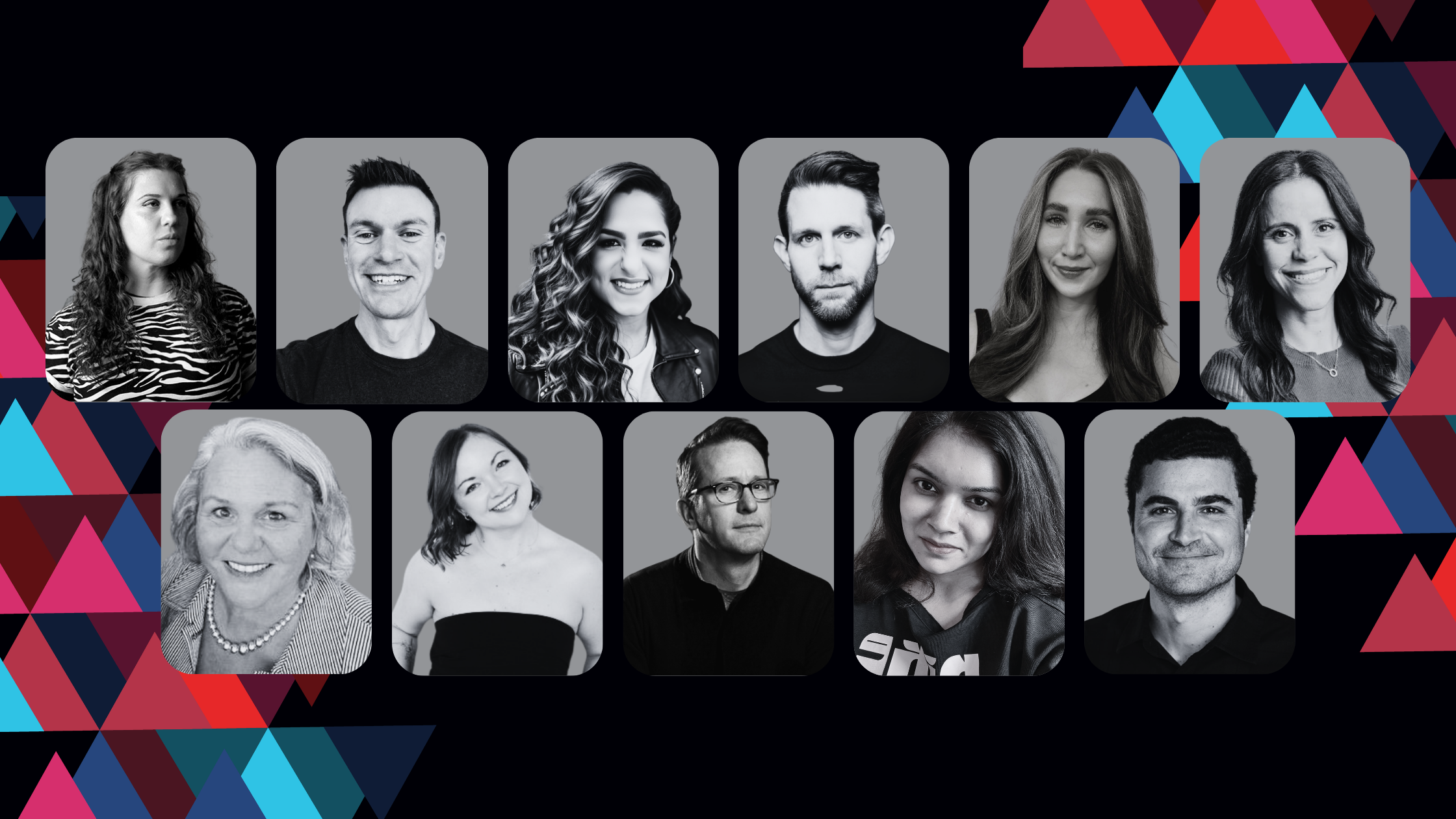
Meet the 2026–2027 AAF Seattle Board of Directors. Building on two years of renewed momentum, this group of returning leaders and new voices is ready to strengthen connections, expand our reach and help shape the next chapter for Seattle’s creative community.
A new year. New voices. Growing momentum. And an even bigger vision for Seattle’s creative community.
AAF Seattle is proud to introduce its 2026–2027 Board of Directors, a group of leaders from across advertising, marketing, communications, design, media, production, technology and the broader creative industry who are volunteering their time and talent to help strengthen our community.
The past two years have been a period of rebuilding and renewed momentum for AAF Seattle. We’ve brought people back together, expanded programming, strengthened the American Advertising Awards, created new opportunities for connection and professional development, and continued building a chapter that reflects the breadth of Seattle’s creative economy.
This year, we’re building on that foundation.
Our focus remains rooted in four pillars: Connection, Recognition, Service and Growth. But as AAF Seattle grows, so does our ambition for what those pillars can mean: reaching more corners of our industry, creating more opportunities for people to connect and learn from one another, celebrating the extraordinary work being created here, supporting the next generation of talent, and advocating for the people and businesses that make up our creative community.
“The last two years have shown us what’s possible when people come together around a shared belief in this community. We’ve rebuilt a lot, but we’re not interested in simply maintaining what we’ve created. This next chapter is about growing our reach, strengthening the organization and making sure more people across Seattle’s creative economy see themselves in AAF Seattle and know there is a place for them here.”
— Valentina Gomez Bravo, President, AAF Seattle
Meet the 2026–2027 AAF Seattle Board of Directors
This year’s board brings together returning leaders and new voices with experience spanning agencies, brands, technology, higher education, production, business development, strategy, events and community building.
Valentina Gomez Bravo — President
Executive Creative Director, University of Washington | Author | Speaker | Educator
Valentina returns as President, continuing to lead AAF Seattle’s growth and evolution with a focus on building a more connected, visible and inclusive creative community in the region.
John Line — Advisory Board Chair
Managing Director, Copacino Fujikado
After serving as Membership Director, John moves into the role of Advisory Board Chair, bringing decades of agency leadership, operations and client experience to help support the board and the organization’s long-term direction.
Andy Farnum — Treasurer
Marketing Project Manager via Inviso Marketing — Microsoft
A returning board member and longtime technology marketing leader, Andy steps into the Treasurer role, bringing experience across finance, agency operations, project management and digital strategy.
Heather Alabado — Brand & Marketing Director
Creative Director / Director, Heatshe.com
Heather returns to lead AAF Seattle’s brand and marketing efforts, bringing her multidisciplinary background across advertising, branding, animation, production and creative leadership.
Frances Champion — Sponsorship Director
Senior Account and Project Manager, Copacino Fujikado
Frances joins the board to lead sponsorship strategy and partnerships. With agency experience spanning account management, business development and major new-business wins, she will help build relationships that expand what AAF Seattle can offer the community.
Kate Zavitnevich — Events Co-Director
Head of Client Services & Growth, HRVIST
Kate returns to help create events designed not simply to fill a room, but to foster meaningful relationships across Seattle’s creative community.
Kelly Lanes — Events Co-Director
Co-Founder, Fuze the Agency | Entrepreneur | Author | Podcaster | Public Speaker
Kelly returns as Events Co-Director, bringing her entrepreneurial energy, marketing expertise and passion for creating experiences that bring people together.
Andrés Rodriguez — Communications Director
VP of Strategy, C+C
Andrés returns to guide AAF Seattle’s communications, bringing expertise in brand strategy, multicultural marketing, data-driven storytelling and purpose-led communications.
Ana Noval — Diversity, Equity, Inclusion & Belonging Director
SVP of Marketing, Quinn Thomas
Ana joins the board with more than 17 years of marketing experience and a deep commitment to inclusive representation. She will help AAF Seattle continue creating space for diverse voices, meaningful dialogue and practical approaches to DEI+B across our industry.
Dan Vanderhei — Advertising Education Director
Creative Director, DVDH
Dan returns to lead advertising education, continuing AAF Seattle’s work to connect emerging talent with industry professionals, mentorship, learning and opportunities to grow.
Sonal Rana - Social Media Director
Social Media Strategist & Content Creator
Sonal joins the board with experience in social media strategy, content creation, and digital storytelling across agencies, brand partnerships, and freelance work. With a passion for creating content that sparks emotion and connection, she will lead AAF Seattle’s social media efforts, helping expand the chapter’s digital presence, engage the next generation of marketers, and bring Seattle’s creative community closer together through authentic storytelling.
Cindy Pennington — Executive Director
Owner, Bayview Support
Cindy continues as AAF Seattle’s Executive Director, a role she has held for more than 25 years. Her institutional knowledge and longstanding commitment remain an essential part of the organization and its continued growth.
Built by the Community, for the Community
AAF Seattle has served Western Washington’s advertising community since 1909, but what that community looks like continues to evolve.
Today, our creative economy stretches far beyond any single discipline or type of company. It includes advertising, marketing, communications, design, media, PR, photography, film and video production, digital, technology, brands, independent creatives, entrepreneurs, educators, students and many others whose work shapes how organizations and ideas connect with people.
We want AAF Seattle to be a place where those worlds intersect.
That means creating more opportunities for collaboration instead of competition. More ways for emerging professionals and established leaders to learn from one another. More recognition for the incredible work happening throughout our region. And more reasons for people across our industry to feel connected to the creative community around them.
And because AAF Seattle is a volunteer-led organization, none of that happens without people willing to get involved.
There’s a Place for You Here
Our Board of Directors may help steer the organization, but AAF Seattle belongs to the community.
Whether you want to attend an event, become a member, volunteer your skills, join a committee, support our programming, sponsor an initiative or eventually serve on the board yourself, there are many ways to be part of what we’re building.
We’ve built tremendous momentum together.
Now, we’re ready to see where we can take it next.
Government Report - July 2026
AI and privacy regulation took center stage in July, as states advanced new rules around AI-generated advertising, synthetic performers and consumer data. AAF continues advocating for clear, consistent standards that protect consumers while giving advertisers a workable regulatory framework.
July 2026 Report
AI and privacy regulation took center stage in July, as states advanced new rules around AI-generated advertising, synthetic performers and consumer data. AAF continues advocating for clear, consistent standards that protect consumers while giving advertisers a workable regulatory framework.
State AI Activity
“Synthetic Performers.” A first-of-its-kind New York transparency law targeting AI-generated digital actors went into effect on June 9, 2026. The statute requires advertisers to conspicuously disclose when a commercial campaign features a "synthetic performer" rather than a real human. The momentum to regulate hyper-realistic digital likenesses is rapidly sweeping across state legislatures. In California, lawmakers have advanced Senate Bill 1050 to mandate similar false advertising disclosures. In response, AAF has weighed in with two industry letters opposing the California bill and offering critical industry guidance on the issue. Meanwhile, the Pennsylvania legislature has advanced its own Artificial Intelligence Transparency in Advertising Act through House Bill 95. The Pennsylvania bill is designed to protect consumers by enforcing clear disclosures the very first time an AI-altered element appears in a promotion. Together, these sweeping state-level bills represent an aggressive new era of regulatory frameworks managing synthetic media.
Other AI-Related State Activity
The state-level regulatory landscape for AI extends far beyond performer likenesses.
A major area of rapid legislative action centers on political advertising, where states like Vermont have approved measures mandating prominent disclosures for any deceptive, AI-altered media used in campaign promotions.
Beyond political messaging, broader commercial transparency mandates are gaining momentum; for instance, Georgia and Massachusetts have introduced comprehensive bills requiring automated or conspicuous disclosures whenever generative AI is utilized to create or modify commercial content.
Concurrently, state-level data ownership and intellectual property laws are shifting, highlighted by Arkansas enacting statutes that clarify copyright ownership parameters for inputs fed into generative models.
For national brands, navigating this emerging patchwork is increasingly high-stakes, as state Attorneys General are actively treating undisclosed AI marketing as deceptive trade practices.
Federal Privacy Activity
The SECURE Data Act (H.R. 8413), passed on June 3, 2026, by the House Subcommittee on Commerce, Manufacturing and Trade, would replace the fragmented patchwork of state privacy regulations with a single national standard. For the advertising industry, this would establish a uniform framework for opt-out targeted advertising and data sales, offering a more predictable environment for campaign planning and consumer compliance. Though the House might pass the bill, it faces an uphill battle in the Senate.
AAF continues to work with our partners at Privacy for America to urge Congress to enact federal privacy legislation. Many local AAF chapters, represented by members of the House Energy and Commerce Committee’s Privacy Working Group, have contacted those members encouraging them to push for action. AAF Des Moines has reached out to Rep. Mariannette Miller-Meeks, AAF Fort Worth to Rep. Crain Goldman, AAF Houston to Rep. Dan Crenshaw and Rep. Randy Weber, the Idaho Advertising Federation to Rep. Russ Fulcher, AAF Louisville to Rep. Brett Guthrie, AAF North Central Florida to Rep. Kat Cammack, AAF North Dakota to Rep. Julie Fedorchak, AAF Roanoke to Rep. Morgan Griffith, and AAF Tampa Bay to Rep. Gus Bilirakis.
State Privacy Activity
In the absence of Congressional action, many states are seeking to pass their own privacy laws, some comprehensive and some more narrowly targeted, such as regarding health, location data, or pricing programs. The AAF does not support the enactment of any of these laws, believing a single national standard would better serve both consumers and businesses. However, in recognition that many states will pass privacy laws, in addition to expressing our opposition, we offer suggestions to lawmakers as to how they can make the measures more closely align with existing laws in other states.
Newly Passed and/or Enacted State Privacy Laws
New Jersey Enacts Data Broker Law. On June 30, 2026, New Jersey Governor Mikie Sherrill signed into law A5328, establishing a strict, immediate prohibition on the sale or licensing of sensitive data, and creating a mandatory public registry for data brokers. This sweeping legislation introduces a new "data collector" category, expanding compliance obligations to entities that sell or license consumer data to brokers. While registration is required, the public database for these brokers is not anticipated to be operational until March 2027. Covered entities must comply with requirements regarding annual fees, data privacy practices, and cybersecurity history reporting. Violations of the law carry severe penalties, reaching up to $50,000 for each individual record improperly sold or licensed. Consequently, advertising compliance teams must immediately audit data handling practices to ensure compliance with these new regulations.
Vermont Data Privacy and Online Surveillance Act. Governor Phil Scott signed S71, the Vermont Data Privacy and Online Surveillance Act, into law on June 16, 2026, and most of its provisions will take effect on January 1, 2028. The enactment revives comprehensive consumer privacy legislation in Vermont while bringing the state into closer alignment with other state-level frameworks. However, it imposes broad new compliance obligations on companies doing business in the state, including mandatory consent requirements, regular data protection assessments, and expanded consumer data rights. Specifically, the new law requires the advertising industry to allow consumers to opt out of targeted advertising, data sales, and certain profiling activities. AAF joined others in the industry in a letter opposing the overbroad obligations.
Louisiana Data Privacy Act. Louisiana Governor Jeff Landry signed Senate Bill 386 into law on May 29, 2026, officially enacting the Louisiana Data Privacy Act. The new law, which goes into effect on January 1, 2027, grants consumers the right to opt out of their personal data being processed for targeted advertising. It also requires businesses engaging in targeted advertising to conduct rigorous data protection assessments before doing so. Although the new legislation does not introduce entirely novel compliance obligations, it features an interesting mix of California- and Connecticut-style frameworks.
Delaware HB 380 Relating to Personal Data Privacy, Veto Request. AAF submitted a letter, along with others in the industry, urging Governor Matt Meyer to veto this bill, which would amend the Delaware Personal Data Privacy Act (“DPDPA”) in a manner that would diverge from the existing state privacy law consensus. If enacted, the law would subject more advertising agencies to state privacy laws by drastically lowering the consumer data threshold, mandating Data Protection Assessments for targeted advertising, and requiring stricter contractual agreements for sharing consumer data with third-party advertising partners. The yet-to-be-signed bill would require that businesses disclose processing purposes “at the time of collection” and restrict subsequent uses of personal data to those purposes unless additional consumer consent is obtained. This departs from the framework adopted in most state privacy laws, which generally require businesses to maintain publicly available privacy notices describing categories of data collected and processing purposes, but do not mandate a separate, additional collection-stage disclosure tied to purpose limitation obligations.
Active State Privacy Bills
California AB 883 Relating to Public Records. AAF joined other industry groups in a letter opposing this bill, which would, among other things, shorten from 45 days to 30 the required timeframe for data brokers to check the Delete Request and Opt-Out Platform (“DROP”) and process consumers’ deletion requests. The bill also would establish a private right of action. Although we appreciate the CA Assembly’s focus on protecting personal information associated with elected officials and judges, the legislature should allow the recently enacted deletion mechanism to operate under its existing timelines and existing enforcement mechanisms before proposing changes.
California AB 1542 Sensitive Personal Information. As currently drafted, AB 1542 takes an overly broad and blunt approach by flatly prohibiting businesses from selling or sharing sensitive personal information when Californians already have a right to limit the use and disclosure of sensitive personal information under existing law. AB 1542’s approach also starkly contrasts with the approach of most other state privacy laws, which require consumer consent to process sensitive personal information rather than banning the processing of such data outright. AAF is working with other stakeholders to oppose the bill and offer constructive input to the sponsors.
Massachusetts H. 5479 Consumer Data Privacy. H. 5479 contains provisions that are out-of-step with privacy laws in other states and will only add to the increasingly complex privacy landscape for both businesses and consumers across the country. AAF submitted an industry letter asking the legislature to adopt an approach to data privacy that is harmonized with other state privacy laws.
New York S8623B and A9349B Prohibits the Use of Surveillance Pricing. AAF joined other advertising industry groups in a letter opposing these companion bills. They are drafted in a way that could be interpreted to apply to business-to-business contexts rather than applying only to business-to-consumer transactions. Before advancing the bills further in the legislative process, we requested that the legislature clarify that the bills apply solely to business-to-consumer contexts, do not create a private right of action, and eliminate the rulemaking authority included in the legislation.
Alaska HB 367 Consumer Data Privacy Act. In an industry letter, AAF urged the Alaska House Finance Committee to allow the ongoing federal effort to enact a preemptive national privacy law, rather than seeking to adopt a privacy law that is out-of-step with that federal proposal. The Alaska bill also does not align with the vast majority of omnibus privacy laws across the states.
New York SB 9269 and AB 10357 Health Information Privacy Act. This bill would hinder New Yorkers’ ability to access services and burden the operation of many businesses in the state. Along with our counterparts in the industry, AAF submitted a letter opposing the two companion bills, noting that the legislative language in each has not materially changed from substantially similar legislation that Governor Hochul vetoed last year.
Prescription Drug Advertising
The Food and Drug Administration (FDA) has formalized plans to propose sweeping changes targeting direct-to-consumer (DTC) prescription drug advertising. The proposed rule, Transparency in Direct-to-Consumer Advertising, would eliminate the long-standing "adequate provision" option for broadcast and digital media. Historically, this allowed ads to reference external sources like websites for full side-effect details. If finalized, future campaigns must include a complete "brief summary" of all risks directly within the commercial itself. Industry coalitions warn this shift could severely impact DTC broadcast ads due to cost-prohibitive airtime lengths. Stakeholders should prepare for the Notice of Proposed Rulemaking (NPRM) expected in December 2026. This publication will trigger a public comment period before final rules take effect in mid-2027. AAF will work with others in the industry to provide comments to the proposed rule.
Date Set for 2027 Advertising Day on the Hill
Mark your calendars. AAF’s 2027 Advertising Day on the Hill will be held on Thursday, March 11, in Washington, DC. Advertising Day on the Hill is when AAF members from across the country come to our nation’s Capital to learn about the issues important to the industry. They then travel to Capitol Hill to meet with their Senators and Representatives to educate them about advertising and advocate for policies that will allow advertising to continue to drive the U.S. economy.
Advertising Day on the Hill is among AAF’s most important and consequential programs. In conjunction with Day on the Hill, the AAF Board of Directors will meet on Wednesday, March 10, and incoming Council of Governors officers will hold their Forward Planning meeting on Friday, March 12.
Much more information will be forthcoming, but start making your plans to join us in Washington, DC, on March 11 for AAF’s Advertising Day on the Hill.
The AAF protects and promotes advertising at all levels of government through grassroots activities. Our nationwide network monitors advertising-related legislation on local, state, and federal levels. We put our members face-to-face with influential lawmakers while encouraging self-regulation as a precursor to government intervention, when appropriate, of course. Feel free to reach out with any questions or concerns. To learn more about our national advocacy efforts, click here.
Anne Kierig Joins the American Advertising Federation as Vice President of Government Affairs
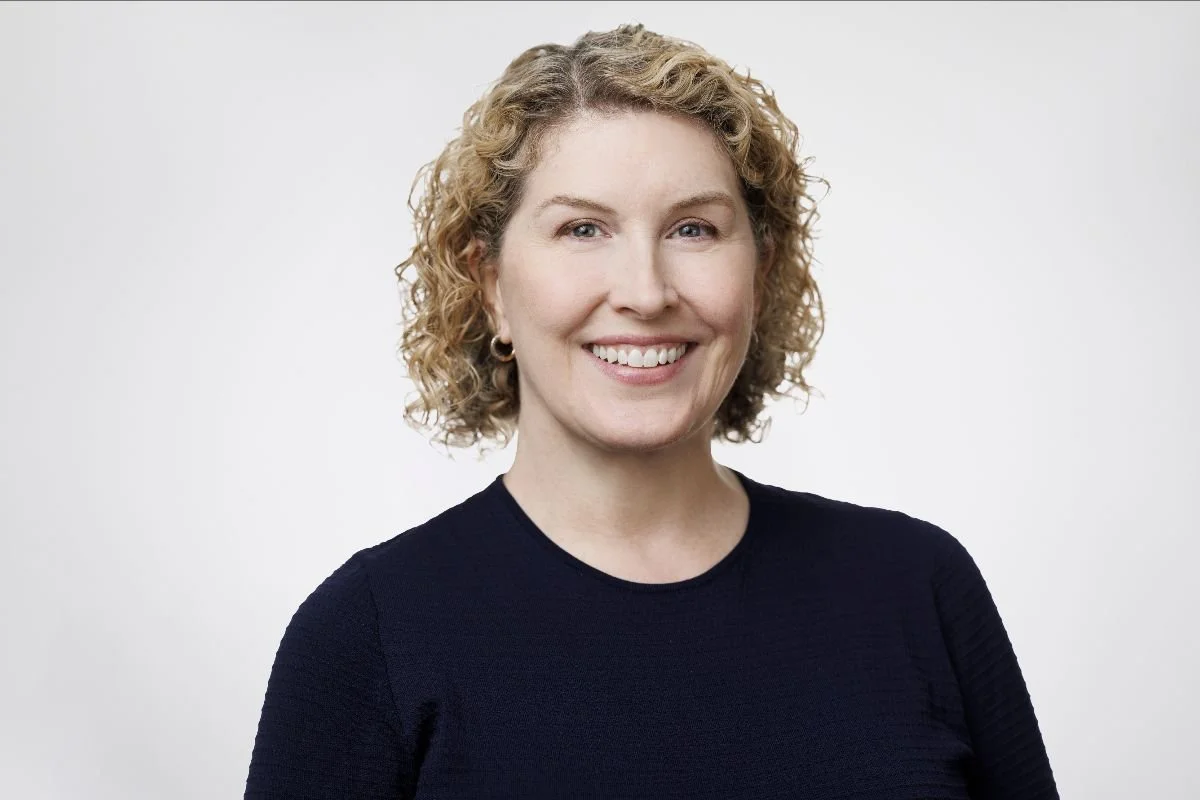
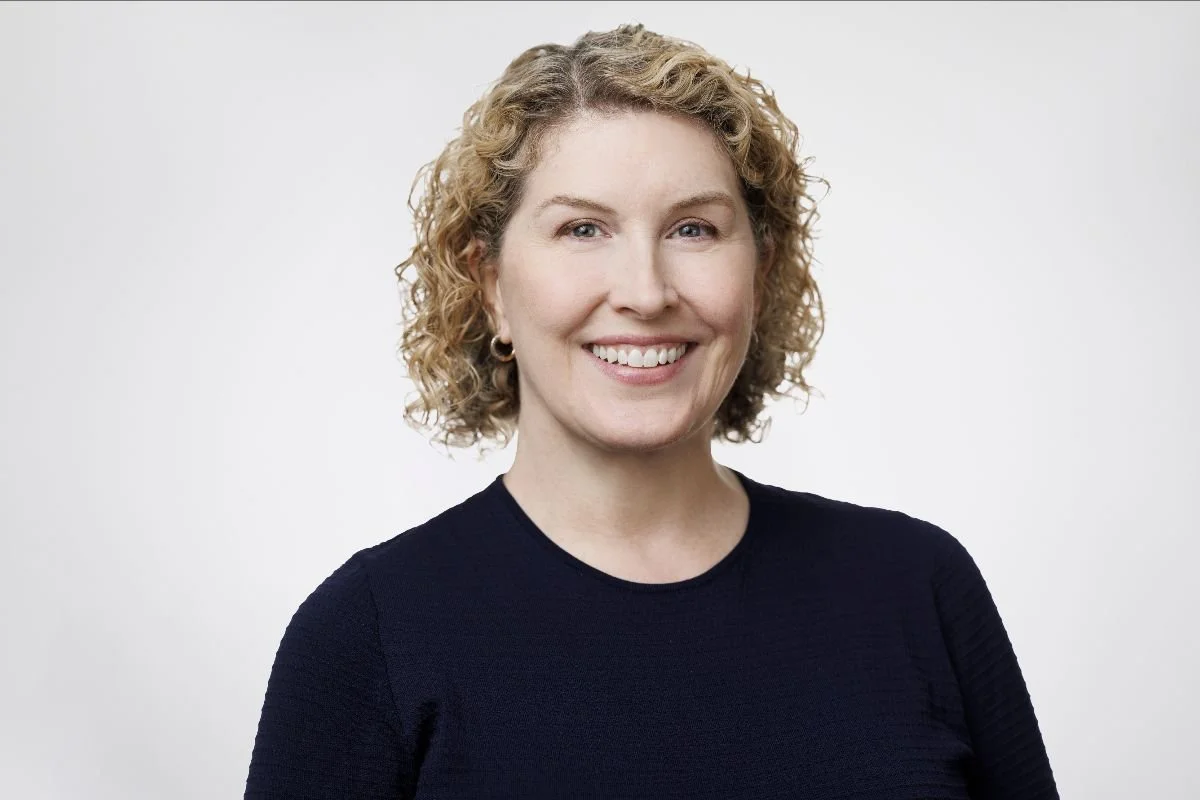
AAF welcomed Anne Kierig as its new Vice President of Government Affairs, succeeding Clark Rector following his remarkable 37 years of service. Kierig brings extensive experience in public policy, digital advertising, consumer protection and regulatory advocacy to AAF’s continued work representing the advertising industry.
Anne succeeds Long-Time Executive Clark Rector Who is Retiring After 37 Years
WASHINGTON, DC – MAY 28, 2026 The American Advertising Federation (AAF), “The Unifying Voice for Advertising,” announced today that Anne Kierig will be joining as Vice President, Government Affairs. She will succeed Clark Rector, who is retiring after 37 years with the AAF. Anne comes from Amazon, where she most recently served as Senior Manager of Public Policy. She will be based in DC and will start immediately. She will report directly to Steve Pacheco, President and CEO of AAF.
“Anne’s background uniquely prepares her to lead the AAF’s advocacy efforts across local, regional, and national levels,” said Pacheco. “Throughout her career, Anne has advocated directly with lawmakers and built coalitions with trade associations and civil society groups to influence regulatory outcomes. This experience aligns perfectly with the AAF’s mission to protect and promote the well-being of advertising through our unified grassroots network.”
As Senior Manager of Public Policy at Amazon, Anne served as a primary subject-matter expert on Section 230, part of the Communications Decency Act that provides legal immunity to online platforms. This included briefing executives and lawmakers, crafting policy proposals, and guiding corporate responses to legislative reform efforts. She also oversaw public policy related to digital advertising, including transparency, targeting standards, and consumer protection, influencing both internal product design and external regulatory outcomes. Prior to Amazon, she was Director of US Government Affairs and Policy at Blackberry, Counsel at Venable LLP, and an attorney at DLA Piper, among other experiences.
Commenting on Clark Rector’s retirement, Pacheco said, “Clark leaves behind 37 years of extraordinary service on behalf of AAF and our Members. Over the years, he’s helped support and lead lobbying efforts that have defeated ad tax proposals and other major threats to our industry before Congress. Quite simply, he’s helped our 150 local advertising federations across virtually every state, while being our most vocal advocate before lawmakers and regulators. There aren’t enough words to thank Clark for his contributions beyond thank you, we will miss you, and I know I speak for the entire organization when I wish you all the very best.”
Clark will continue to work through July to help ensure a seamless transition.
Government Report - May 2026
Federal privacy legislation took center stage in May with the introduction of the SECURE Act, while states continued considering new rules around AI disclosures, consumer data and digital advertising. AAF continues advocating for a balanced national privacy standard and policies that protect consumers while supporting the ad-driven economy.
May 2026 Report
Federal privacy legislation took center stage in May with the introduction of the SECURE Act, while states continued considering new rules around AI disclosures, consumer data and digital advertising. AAF continues advocating for a balanced national privacy standard and policies that protect consumers while supporting the ad-driven economy.
Comprehensive Federal Privacy Legislation Introduced
Comprehensive privacy legislation, H.R. 8413, the Securing and Establishing Consumer Uniform Rights and Enforcement over Data Act (SECURE Act) has been introduced in the U.S. House of Representatives. The AAF has long advocated for a single national privacy law and believes that the SECURE Act reflects a thoughtful and balanced approach to safeguarding individuals’ privacy interests while preserving the benefits enjoyed by millions of Americans in their role as consumers in the data-driven economy.
The SECURE Act is a product of the House Energy and Commerce Committee Privacy Working Group and is sponsored by Rep. John Joyce (R-PA 13), Vice-Chairman of the Committee. While it still has a long road to travel, many Congressional insiders believe the SECURE Act has a chance of being enacted this year.
AAF is working with our partners in Privacy for America to urge the Committee to pass the legislation soon and send it on to the full House of Representatives. Many AAF chapters whose Member of Congress sits on the Energy and Commerce Committee have already contacted them, urging support of the legislation. If and when the bill moves forward, we will work with more chapters as appropriate to urge their representatives to support it as well.
More States Look at Requiring AI Disclosures in Advertisements
Following the enactment of a law in New York requiring advertisements to disclose the use of “synthetic performers,” many other states are considering similar measures. AAF continues to oppose these measures arguing that the use of AI, whether it be "synthetic performers” or other uses is not inherently deceptive. State bills of concern include:
California Senate Bill 1050. AAF response.
Hawai’i HB 2137. AAF Response.
Pennsylvania HB 95. AAF Response.
Date Set for 2027 Advertising Day on the Hill
Mark your calendars. AAF’s 2027 Advertising Day on the Hill will be held on Thursday, March 11, in Washington, DC. Advertising Day on the Hill is when AAF members from across the country come to our nation’s Capital to learn about the issues important to the industry. They then travel to Capitol Hill to meet with their Senators and Representatives to educate them about advertising and advocate for policies that will allow advertising to continue to drive the U.S. economy.
Advertising Day on the Hill is among AAF’s most important and consequential programs. In conjunction with Day on the Hill, the AAF Board of Directors will meet on Wednesday, March 10, and incoming Council of Governors officers will hold their Forward Planning meeting on Friday, March 12.
Much more information will be forthcoming, but start making your plans to join us in Washington, DC, on March 11 for AAF’s Advertising Day on the Hill.
State Privacy Action
In the absence of Congressional action, many states continue to look at passing their own privacy laws, some comprehensive and some more narrowly targeted, such as health, location data, or pricing programs. The AAF does not support the enactment of any of these laws, believing a single national standard would better serve both consumers and businesses. However, in recognition that many states will pass their own laws, in addition to expressing our opposition, we offer suggestions to lawmakers as to how they can make the measures more closely align with existing laws in other states.
3 3 26 Minnesota HF 2700 To Modify the Minnesota Consumer Data Privacy Act
Our concern with the current proposal relates to how the term “health data” is defined. Because the term includes any data that “identifies” a health status, it may unintentionally encompass non-sensitive data, and therefore impact general advertising practices that do not involve identifying or targeting individuals based on actual health conditions. Read the full letter.
3 9 26 Tennessee SB 1998 Prohibits Algorithmic Pricing
SB 1998 would significantly limit Tennessee consumers’ access to discounts and special pricing. Read the full letter.
3 9 26 Maryland SB 889 Prohibiting Surveillance-Based Pricing
SB 889 would fail to adequately protect the everyday value that common pricing practices, such as discounts and personalized offers, provide to Maryland consumers, nor does it recognize that personalized pricing strategies can enhance consumer choice and satisfaction. Read the full letter.
3 9 26 Maryland SB 827 Regulates Designs and Uses of Chatbots
SB 827 would prohibit an operator from processing a user’s “chat log” to determine whether to display an advertisement for a good or service or to customize an advertisement shown to that user. This approach is both overbroad and in tension with Maryland’s existing privacy framework under the Maryland Online Data Privacy Act (“MODPA”), which already gives consumers the right to opt out of targeted advertising, rather than eliminating it outright. Read the full letter.
Hawai’i SB 1163 Prohibits the Sale of Geolocation and Internet Browser Information Without Consent
As drafted, SB 1163 would adopt a privacy framework that is out of step with approaches taken by other states, undermine the ad-supported Internet, and disrupt the online marketplace. Read the full letter.
3 26 26 New Hampshire HB 1460 Prohibiting the Sale of Location and Other Sensitive Data Regarding Children
We ask that HB 1460 be harmonized with existing law in New Hampshire. The Senate should focus its efforts on harmonizing the bill with the New Hampshire Data Privacy Act which consistently uses “known child” as the standard, aligned to trigger heightened obligations for children’s data. Read the full letter.
4 6 26 California Privacy Protection Agency Invitation for Preliminary Comments, Reducing Friction in the Exercise of Privacy Rights
We strongly believe that any future regulations should avoid prescribing user-interface design or notice language in a manner that effectively dictates how businesses communicate with consumers or structure their products. Such mandates may raise constitutional concerns and extend beyond the Agency’s authority to regulate. Read the full letter.
4 6 26 Vermont H. 211 Relating to Data Brokers and Personal Information
H. 211 should be updated to clarify that it does not create a private right of action under any law. Instead, enforcement should be vested with the Attorney General (“AG”) alone, because such an enforcement structure would lead to stronger outcomes for Vermont residents while better enabling businesses to allocate resources to developing processes, procedures, and plans to facilitate compliance with the bill’s new requirements. Read the full letter.
4 12 26 Alaska HB 367 Relating to the Privacy of Consumer Personal Information
As currently drafted, HB 357 is significantly out of step with other state omnibus privacy laws. We ask the House Judiciary Committee to harmonize the bill with the consensus approach to data privacy adopted across several states, such as Nebraska and Oklahoma. Read the full letter.
5 7 26 California Privacy Protection Agency, Invitation for Preliminary Comments, Delete Request and Opt-Out Platform Audits
We have concerns about certain topics identified for possible new rulemaking and the direction under consideration by the Agency. Below we provide comments on a non-exhaustive list of issues we have identified with the Agency’s preliminary rulemaking efforts. Read the full letter.
The AAF protects and promotes advertising at all levels of government through grassroots activities. Our nation-wide network monitors advertising-related legislation on local, state and federal levels. We put our members face-to-face with influential lawmakers while encouraging self-regulation as a preemptor to government intervention, when appropriate of course. To learn more about our advocacy efforts, click here.
Government Report - March 2026
Privacy, data use and digital advertising remain active areas of legislation nationwide. In Washington, AAF weighed in on proposals involving commercial email rules and consumer data, while continuing to advocate nationally on privacy, advertising taxes, AI and other issues affecting our industry.
March 2026 Report
Privacy, data use and digital advertising remain active areas of legislation nationwide. In Washington, AAF weighed in on proposals involving commercial email rules and consumer data, while continuing to advocate nationally on privacy, advertising taxes, AI and other issues affecting our industry.
Congress Considers Children’s Privacy
The U.S Senate unanimously passed the Children and Teens’ Online Privacy Protection Act (COPPA 2.0). The bill would impose new restrictions on online companies' ability to collect and use data from teens under 17. The legislation would expand the current children's privacy law by prohibiting website and app operators from knowingly serving targeted ads to users under 17 -- including ads based on those teens' online activity. The bill also would prohibit websites and apps from knowingly collecting personal data from users between the ages of 13 and 16 without their consent.
On the other side of the Capitol, the House Committee on Energy and Commerce reported eight pieces of legislation to the full House of Representatives, including the Kids Internet and Digital Safety (KIDS) Act and the App Store Accountability Act. Committee Chair Brett Guthrie announced the committee would not consider COPPA 2.0, saying lawmakers would continue to work toward a bipartisan agreement on the legislation.
Proposed Changes to Maryland Digital Advertising Tax Under Consideration
AAF, joined by AAF Baltimore, AAF Nebraska, and many others, has filed comments with the Comptroller of the Treasury in Maryland regarding proposed regulations to the state’s Digital Advertising Tax, which continues to be challenged in court. The comments argue that the proposed regulations do not reflect the intent of the Maryland General Assembly when it passed the law and would render the DAT unadministrable by creating artificial distinctions among advertisement types.
Indiana Advertising/Services Tax Introduced
Indiana Representative J.D. Prescott (R) introduced legislation to expand the sales tax base to include most services, including advertising. Rep. Prescott is a member of the tax writing House Ways and Means Committee.
Senate President Rodric Bray (R) has expressed the desire to reduce the personal income tax and has suggested that tax on services was “on the table”. However, when both chambers unveiled their 2026 legislative priorities, the sales tax base expansion was not included in either.
While the threat appeared minimal, AAF alerted our Indiana members to the measure advising monitoring, but no engagement unless a serious threat emerged. The legislature adjourned February 27 without passing HB 1288.
Washington Email Marketing Legislation
AAF signed a letter to Washington state legislative leaders in support of legislation that will prevent marketers and retailers from being sued for so-called “deceptive” email subject lines.
As background, in April 2025, the Washington Supreme Court considered a case involving the clothing retailer Old Navy that alleged its emails violated the Commercial Electronic Email Act (CEMA) since they contained false or misleading information about a sale that would last only one week, when in fact it extended into a second week. The Court held that under CEMA, marketers are prohibited from sending Washington residents commercial emails that contain any false or misleading information in the subject line. This expanded the previous view that CEMA only prohibited false or misleading information in the subject line as to the nature of the email as an advertisement. Under the more expansive view adopted by the state Supreme Court, the number of class action lawsuits against email marketers increased dramatically. Numerous major national retailers have been targeted.
SB 5976 would restore the original interpretation of CEMA. It would prevent marketers from sending emails that hide their commercial nature, rather than punishing them for harmless, commonplace marketing language that no consumer relied on or caused them harm. Specifically, the subject line must be likely to mislead a reasonable consumer about a fact material to the transaction and be material to the consumer completing the transaction. There is bipartisan support for the legislation.
Companion legislation has overwhelmingly passed the House of Representatives and is being considered in the Senate.
States Targeting “Surveillance Pricing”
A new trend in many states is to restrict or ban so-called “surveillance pricing,” the use of sometimes personally identifiable information from third parties to inform discounts and loyalty programs.
Rather than strengthening consumer protections, these bills risk higher prices, reduced choice, and fewer opportunities for consumers to benefit from discounts and incentives, while also limiting businesses’ ability to use third party data to offer competitive pricing and promotions.
AAF, often joined by our local chapters, has sent letters in multiple states opposing such measures, such as:
Maryland HB 148 and HB 895. Read the full letters here and here. Joined by AAF Baltimore.
Nebraska LB 1006 Read the full letter here. Joined by AAF Nebraska.
Pennsylvania HB 1942. Read the full letter here. Joined by AAF Pittsburgh and Ad 2 Pittsburgh.
FTC Examining Data Driven Economy
February 26, the Federal Trade Commission conducted a workshop on Consumer Injuries and Benefits in the Data-Driven Economy. The AAF supported Privacy for America submitted comments to the agency highlighting the many consumer and business benefits derived from the responsible use of data. We will remain engaged with P4A, the FTC and Congress to advocate for federal legislation that would clearly define prohibited data practices that make personal data vulnerable to breach or misuse, while preserving the benefits that come from responsible use of data.
State Privacy Action
In the absence of Congressional action, many states continue to look at passing their own privacy laws, some comprehensive and some more narrowly targeted, such as health, location data, or pricing programs. AAF does not support the enactment of any of these laws, believing a single national standard would better serve both consumers and businesses. However, in recognition that many states will pass their own laws, in addition to expressing our opposition we offer suggestions to lawmakers as to how they can make the measures more closely align with existing laws in other states.
Recent comments filed include:
1 12 26 California AB 833 An Act Relating to Data Brokers
We appreciate the Assembly’s focus on protecting personal information and addressing the unique risks faced by elected officials and judges. However, as currently drafted, AB 883 contains provisions that would remove access by elected officials and judges to essential services. In addition, the short five-day timeline for effectuating deletion requests in AB 883 would be an unnecessary burden for well-meaning data brokers endeavoring to comply with applicable laws. Read the full letter.
1 16 16 New Hampshire HB 1460 Prohibiting the Sale and Other Sensitive Data Regarding Children
HB 1460 would prohibit the sale of location and other sensitive data regarding children, but it is misaligned with existing New Hampshire law because it departs from the statute’s “known child” standard and uses the undefined term “location data” rather than the established concept of “precise geolocation data.” Read the full letter.
1 16 26 Vermont H. 211 An Act Relating to Data Brokers and Personal Information
Vermont law defines a data broker as a business that “knowingly collects and sells or licenses to third parties the brokered personal information of a consumer with whom the business does not have a direct relationship.” H. 211’s proposed amendment includes a definition of “direct relationship” that would unreasonably broaden the scope of businesses treated as data brokers, departing from both the existing law’s definition and the Legislature’s clear intent to regulate businesses whose core activity is the sale or licensing of personal data about consumers with whom they lack a meaningful relationship. Read the full letter.
1 21 26 New Hampshire HB 1694 Relative to the Regulation of and Protections for Personal Data Obtained by Websites and Data Brokers.
HB 1694 would significantly expand consumer opt-out rights beyond those provided under current New Hampshire law. The bill would also create a new data broker registry that would require registration by many companies not traditionally considered data brokers, including processors. Read the full letter.
1 29 26 Hawaii SB 1163 Relating to Privacy
SB 1163 would ban routine uses of browser information without consent and deviate from typical data privacy legislation by providing no exceptions. The bill would impede the ad-subsidization of the Internet for Hawaiians, increasing the cost for access to web-based and app-based services, because the bill’s language inadvertently limits responsible digital advertising. Read the full letter.
1 29 26 South Carolina H. 3431 Social Media Regulation Act – Request to Veto
We strongly believe minors deserve meaningful privacy protections supported by reasonable government policies and responsible industry practices. H. 3431, however, raises significant First Amendment concerns for South Carolina minors and businesses alike. The bill would directly harm South Carolina minors by restricting their access to content and information, leaving them at a clear disadvantage compared to their peers in other states. Read the full letter. The bill was signed into law on February 5, 2026.
1 30 26 Washington HB 2483 Creating a Data Broker Registry
If the Legislature chooses to establish a data broker registry, we encourage the Committee to harmonize HB 2483’s requirements with existing state approaches to ensure consistency for businesses operating nationally and to reduce the need for duplicative disclosures, while still achieving transparency goals for consumers. Read the full letter.
2 2 26 Virginia SB 338 Consumer Data Protection Act
SB 338’s prohibition on the sale of precise geolocation data would also have serious and unintended consequences for emergency alerts and public safety communications that Virginians rely on. Location data powers emergency notices, particularly AMBER alerts, severe weather notices, and other time-sensitive public safety messages, allowing these notices to be immediately displayed to users in the impacted area on any device they are using. Read the full letter.
2 4 26 Virginia HB 638 Regulation of Data Brokers
The registry requirements in HB 638 mandate that data brokers annually register with the Secretary of the Commonwealth and disclose information about their business practices. This information is already routinely disclosed by data brokers through their privacy policies and compliance mechanisms under existing state privacy laws, including the Virginia Consumer Data Protection Act (“VCDPA”), which similarly requires public transparency about data collection, sale, and consumer rights. Should the Committee establish a data broker registry, we urge you to align HB 638’s requirements with existing state standards. Read the full letter.
2 5 26 Virginia SB 338 Consumer Data Protection Act
SB 338 would amend the Virginia Consumer Data Protection Act (“VCDPA”) to include an explicit prohibition on controllers from “selling” or offering to “sell” precise geolocation data. If enacted, such an amendment to the VCDPA would deprive Virginia consumers of access to critical services and benefits that depend on location data. Read the full letter.
2 17 26 Maine LD 1822 Online Data Privacy Act
LD 1822 would make the state’s approach to privacy an outlier in ways that would harm consumers and businesses of all sizes. Maine should instead focus its efforts on harmonizing the bill with the approach to privacy in other states. A patchwork of differing privacy standards across the states would create significant costs for businesses and consumers alike. Efforts to harmonize state privacy legislation with existing privacy laws are critical to minimizing costs of compliance and fostering similar privacy rights for consumers no matter where they live. Read the full letter.
2 17 26 Florida SB 482 Artificial Intelligence Bill of Rights
SB 482 would prohibit artificial intelligence (“AI”) technology companies from selling or disclosing personal information unless it is deidentified. This sweeping ban on sales and disclosures of personal information would diverge sharply from Florida’s existing privacy law, the Florida Digital Bill of Rights, which expressly allows the sale or disclosure of personal data subject to a consumer’s right to opt out of the sale or processing of personal data for targeted advertising or other purposes. Read the full letter.
2 20 26 Illinois HB 3494 Health Data Privacy Act
If enacted, the bill would hinder individuals in Illinois from accessing services and burden the operation of many businesses in the state. Our organizations support the enactment of meaningful privacy protections for Illinoisans. However, as presently drafted, HB 3494 would have far-reaching, unintended, and unfavorable consequences for individuals in Illinois and the business community alike. Read the full letter.
2 20 26 Maryland SB 616 Data Broker Registry
SB 616 would create a new registry that would require registration by many companies not traditionally considered data brokers and would not clearly define what the associated fee would be for such companies. Read the full letter.
2 20 26 Minnesota SF 2940 Minnesota Data Privacy Act Modification
SF 2940 would amend the MCDPA by adding a new, overly broad definition of “health data,” which could unintentionally impede Minnesotans from receiving useful and relevant information about products and services they may desire. As defined, the term “health data” would include any information that could possibly be related—however tangentially—to the health of an individual. The definition could be interpreted to include basic data points, such as the fact that an individual purchased non-prescription shampoo for individuals with dry hair at a local grocer, attended a fitness class, or signed up to receive promotional notices about specific clothing or footwear restocks. Read the full letter.
2 23 26 Virginia SB 338 Consumer Data Protection Act
Under the VCDPA, businesses may process or sell precise geolocation data only with a consumer’s consent. SB 338 would go significantly further by effectively prohibiting the sale of precise geolocation data altogether, even where consumers have knowingly and voluntarily consented to such sales. Read the full letter.
2 24 26 Florida SB 482 Artificial Intelligence Bill of Rights
SB 482’s proposed prohibition on certain businesses from disclosing personal information would significantly disrupt standard advertising practices that benefit consumers and contradict the approach of the Florida Digital Bill of Rights. In addition, SB 482’s proposed disclosure requirements for interactions between a user and bot do not clarify whether they apply to businesses that use platforms for advertising or platforms themselves. Read the full letter.
2 24 26 Hawaii SB 1163 Relating to Privacy
The bill would impede the ad-subsidization of the Internet for Hawaiians, increasing the cost for access to web-based and app-based services, because the bill’s language inadvertently limits responsible digital advertising. Read the full letter.
2 24 26 Minnesota HF 2700 Consumer Data Privacy Act
HF 2700 would amend the Minnesota Consumer Data Privacy Act (“MCDPA”) by adding provisions that would significantly frustrate Minnesota consumers and hinder businesses’ attempts to reach them with legitimate and lawful advertising. As presently drafted, the bill would have far-reaching, unintended, and unfavorable consequences for Minnesotans and the business community alike. Read the full letter.
2 24 26 New York “Part AA: Regulation of Data Brokers” in the Fiscal Year 2027 New York State Executive Budget on Transportation, Economic Development and Environmental Conservation
The Act would create new registration requirements for companies in ways that are duplicative of existing laws, are out-of-step with requirements in other states, and would create a significant fiscal burden for the state of New York. Read the full letter.
2 26 26 California CPPA Petition for Rulemaking Regarding Tiered Consent and Minimal Functional Mode for Essential Consumer Devices
The Petition proposes rulemaking that would extend well beyond the scope of rulemaking authority set forth in the California Consumer Privacy Act. Read the full letter.
3 2 26 Virginia SB 338 Consumer Data Protection Act
On behalf of the advertising industry, we write to request that you veto SB 338. SB 338 would amend the Virginia Consumer Data Protection Act (“VCDPA”) to include an explicit prohibition on controllers from “selling” or offering to “sell” precise geolocation data. If enacted, SB 338 would take an overly broad and blunt approach to regulating location data; any specific concerns can be addressed through more tailored legislation that protects Virginians without depriving them of access to important benefits and critical services that rely on such data. Read the full letter.
The AAF protects and promotes advertising at all levels of government through grassroots activities. Our nation-wide network monitors advertising-related legislation on local, state and federal levels. We put our members face-to-face with influential lawmakers while encouraging self-regulation as a preemptor to government intervention, when appropriate of course. To learn more about our advocacy efforts, click here.
Government Report - January 2026
Advertising policy continues to evolve quickly across the country. In 2025 alone, at least 43 states considered legislation involving privacy, data security, digital advertising or broader advertising taxes. AAF responded with more than 60 comments to legislators and regulators, advocating for the interests of the advertising industry and the professionals and businesses it represents.
January 2026 Report
Advertising policy continues to evolve quickly across the country. In 2025 alone, at least 43 states considered legislation involving privacy, data security, digital advertising or broader advertising taxes. AAF responded with more than 60 comments to legislators and regulators, advocating for the interests of the advertising industry and the professionals and businesses it represents.
2025 Recap
AAF Government Affairs had a busy 2025. At least 43 states considered some type of privacy/data security or digital or broader ad tax legislation. Many of the privacy proposals were omnibus bills, others were more narrowly focused, such as on children or health issues. Ultimately, 13 states passed some form of privacy bill, and the state of Washington passed a digital ad tax, which is being challenged. Throughout the year, AAF filed more than 60 comments with legislators and regulators offering our views.
We anticipate 2026, will be equally active and look forward to working with our industry partners and local chapters to advocate on behalf of the advertising industry.
California Social Media Ad Tax
January 12, the California Assembly Committee on Revenue and Taxation conducted a hearing concerning AB 796 which would enact an advertising tax for social media platforms. The measure was the subject of a springtime hearing in the Committee on Privacy and Consumer Protection. Following the hearing, the sponsor requested it be a two year bill, adding it to the 2026 agenda of Revenue and Taxation.
AAF, joined by many of our local chapters (AAF Desert Ad Fed, AAF Fresno, AAF Inland Empire, AAF Orange County, AAF Sacramento, AAF SF Bay Area, AAF Silicon Valley, AAF Western Region, and AAF Baltimore) and other industry allies, sent our letter to the Committee opposing the tax. In addition, AAF EVP Government Affairs Clark Rector was on an episode of the CaliBiz podcast to explain our opposition to the tax.
At the end of the hearing the bill was placed on the suspense file, which Californian insiders say effectively kills it for the session.
Tucson Ad Tax Update
In December, the ad tax under consideration by the Tucson City Council appears to have been rejected. AAF Tucson President Adrienne Robertson reports:
This process has been fast-moving and highly collaborative. I am pleased to share that the proposed Ad Tax in Tucson has been tabled by the Mayor and City Council until further notice following their study session.
AAF Tucson mobilized quickly and effectively in opposition to the proposed ad tax. We met with the Mayor’s Chief of Staff, Charlene Mendoza, to formally present our concerns regarding the proposal that was scheduled for discussion at the next day’s council meeting.
A key point raised during the discussion was Arizona Proposition 126, the Prohibit New or Increased Taxes on Services Initiative, which was approved by voters in 2018 with a 64% “Yes” vote. This measure explicitly prohibits new or increased taxes on services.
Two former AAF Tucson Presidents, Ed Ackerley and Dave Slavin, participated in the meeting and provided valuable historical context on the ad tax, along with substantive insights into why the proposal would be problematic for our industry and the local business community.
In parallel with these efforts, we coordinated outreach with local chambers of commerce, encouraged impacted advertisers to submit formal letters, and engaged local media and advertising outlets to voice their concerns. This collective advocacy played a significant role in having the item removed from the agenda.
Although many of us were prepared to attend the council meeting, the proposal was officially tabled during the study session and will not be discussed at this time. Notably, one council member commented that the ad tax proposal was overly complex.
This outcome reflects a strong, unified effort by our community, and we will continue to monitor developments closely.
Congratulations to everyone at AAF Tucson for a successful outcome and demonstrating once again the power of AAF’s grassroots.
New Jersey Tax Proposed
Legislation to tax “commercial data collectors” has been introduced in New Jersey. The bill was referred to the Senate Budget and Appropriations Committee. While no hearing has been scheduled, its sponsor is Senate President Nicholas Scutari (D), so must it be considered a serious threat. AAF has written to Committee members to express our opposition to the tax.
New York Governor Signs “Synthetic Performers” Bill
New York Governor Kathy Hochel has signed into law a measure requiring all advertisements to disclose the use of “synthetic performers.” When the bill was still in the legislature AAF alerted our New York members about the bill and wrote to legislative leaders expressing our concerns. We also wrote to the Governor urging a veto while also suggesting amendments that would address our concerns about the law.
The AAF protects and promotes advertising at all levels of government through grassroots activities. Our nation-wide network monitors advertising-related legislation on local, state and federal levels. We put our members face-to-face with influential lawmakers while encouraging self-regulation as a preemptor to government intervention, when appropriate of course. To learn more about our advocacy efforts, click here.

Act Now: SB 5814 Is Impacting Your Business — Tell Lawmakers Before December 4, 2025
Washington’s new digital services tax, SB 5814, is already creating significant challenges for advertising and creative professionals across the state. With the House Finance Committee reviewing its implementation on December 4, now is the time for our community to speak up. Read how to contact lawmakers and share the real impact this bill is having on your work and your business.
Dear AAF Members & Community,
As you are likely already aware, SB 5814 took effect in October of this year. The revisions to Washington's tax law have profound and far-reaching adverse impacts on advertising, marketing, public relations, and communications firms across the state. This newly applied tax made Washington-based agencies and practitioners less competitive in an already tight market, and creates administrative challenges and confusion. The WA DOR, though attempting to provide guidance, is struggling to clarify administrative questions because of the law's confusing nature. This new tax could cost jobs and even force some small or boutique firms out of business or out of this state. Professionals in our community are not alone in the collateral damage of this shortsighted bill - event planners, commercial filming, and tourism are also struggling to mitigate the impact it has on their industries as well.
This THURSDAY, DECEMBER 4, 2025, at 1:30 PM, the House Finance Committee has an agenda item "Implementation of Senate Bill 5814."
YOUR VOICE CAN MAKE A DIFFERENCE.
You are encouraged to reach out to the committee and original bill sponsors with comments and recommendations ahead of their meeting. Personal examples of how this bill is impacting you, your employees, your business, and your community of professionals work best. However, if you only have time for a phone call, you can ask them to repeal the law and rewrite one with the consultation and advice of the professionals it impacts.
Below is a list of committee members and their contact info, as well as the original bill sponsors who have an opportunity next session to bring this back to committee for repeal or modification. You will also find an email letter template that you are free to use to help craft your message. Make your voices heard by reaching out to each committee member with your concerns and recommendations. AAF Seattle will be doing the same on behalf of all our community and membership across Washington State.
Committee Members
| Member | District | Phone | |
|---|---|---|---|
| Berg, April (D) Chair | 44 | 360-786-7892 | |
| Street, Chipalo (D) Vice Chair | 37 | 360-786-7838 | |
| Orcutt, Ed (R) Ranking Minority Member | 20 | 360-786-7990 | |
| Jacobsen, Cyndy (R) Assistant Ranking Minority Member | 25 | 360-786-7968 | |
| Abell, Hunter (R) | 7 | 360-786-7988 | |
| Chase, Rob (R) | 4 | 360-786-7984 | |
| Mena, Sharlett (D) | 29 | 360-786-7996 | |
| Parshley, Lisa (D) | 22 | 360-786-7992 | |
| Penner, Joshua (R) | 31 | 360-786-7866 | |
| Ramel, Alex (D) | 40 | 360-786-7970 | |
| Santos, Sharon Tomiko (D) | 37 | 360-786-7944 | |
| Scott, Shaun (D) | 43 | 360-786-7920 | |
| Springer, Larry (D) | 45 | 360-786-7822 | |
| Walen, Amy (D) | 48 | 360-786-7848 | |
| Wylie, Sharon (D) | 49 | 360-786-7924 |
Bill Sponsors
| Sponsor | District | Phone | |
|---|---|---|---|
| Frame, Noel (D) | 36 | 360-786-7670 | |
| Trudeau, Yasmin (D) | 27 | 360-786-7652 | |
| Alvarado, Emily (D) | 34 | 360-786-7667 | |
| Nobles, T'wana (D) | 28 | 360-786-7654 | |
| Pedersen, Jamie (D) | 43 | 360-786-7628 | |
| Valdez, Javier (D) | 46 | 360-786-7690 | |
| Wilson, Claire (D) | 30 | 360-786-7658 |
Take Part in the Work
If you want to help shape how Washington’s creative sector responds to SB 5814, we invite you to join AAF Seattle’s Government Affairs & Advocacy Committee, a group working year-round to support, protect, and elevate the region’s creative community.
A Night With Seattle U AMA’s Driven Students
Seattle’s next generation of marketers is hungry for real-world experience, industry connections, and insights from the professionals doing the work. AAF Seattle Education Director Dan Vanderhei reflects on a recent conversation with Seattle U students—and why supporting emerging talent strengthens our entire creative community.
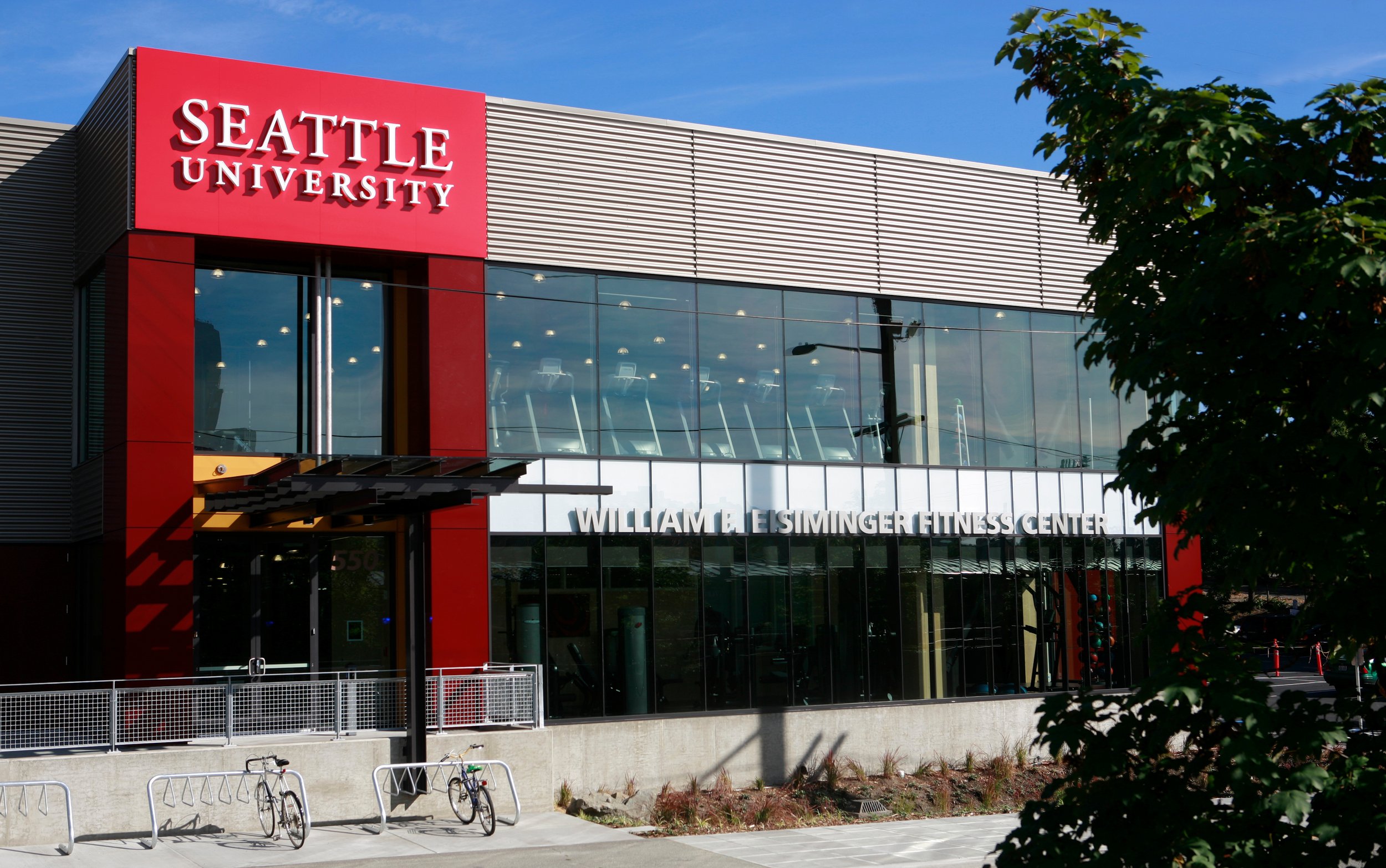
It’s always a bit surprising when people choose to spend their evening listening to me talk. So, when a room full of eager Seattle U AMA students came to hear from Creative Director Chris Corum and me about AAF, the National Student Advertising Competition, and life in advertising, color me floored. Going full Eminem, I’m going to maintain that I’m chopped liver and this turnout had a lot more to do with how hungry students are for professionals to share their insights on marketing and advertising. Kudos to Seattle U and Aria Shaffer for providing the space to explore the world of marketing outside of the classroom.
A few themes clearly hit home. Students wanted to know how to get hands-on experience in a field that values real practice and real-world examples. They wanted to understand how to build a network when they’re just getting started. They were curious how creatives and advertising folk turn a blank canvas into ideas worth sharing and award-winning work. And yes, we had the obligatory discussion about AI in marketing.
A couple things tied all these questions together for me. First, they all point to the type of insight AAF offers its members. Joining, attending, and volunteering with AAF Seattle are great ways to network, learn from fellow ad vets, and get your hands dirty on some important work that affects the entire creative community. For student members specifically, AAF also provides access to internship postings, scholarship opportunities, and soon, some fun ways to meet industry vets and get feedback on work.
Second, if you’re an industry veteran reading this, there’s no shortage of classrooms or student groups eager for your perspective. Reach out. You’ll have a room full of eager faces ready to listen.
What stood out most was just how motivated this group was to soak up every bit of insight they could. These future marketers are doing everything in their power to hit the ground running. Supporting them isn’t just good for the students—it’s good for the entire Seattle creative community.
Dan Vanderhei
AAF Seattle Education Director
Bring AAF Seattle Into the Conversation
Are you an educator, student organization, or campus leader looking to connect students with Seattle’s advertising and creative community? Whether you’re planning a classroom visit, panel, workshop, portfolio review, career conversation, or another opportunity for students to engage with industry professionals, we’d love to hear from you.
Reach out to Dan Vanderhei, AAF Seattle Education Director, to explore how AAF Seattle and our community of professionals can get involved.
Thumbnail Photo Credits: Copyright: Seattle University / Credit: Seattle University / Creator: Chris Joseph Taylor

Navigating the New Digital Services Tax Law — SB5814
Washington’s creative and advertising community came together once again on October 8 for AAF Seattle’s virtual forum, Navigating the New Digital Services Tax Law — SB 5814, a timely and urgently needed conversation about the state’s sweeping new tax requirements for advertising and digital services.
Washington’s creative and advertising community came together once again on October 8 for AAF Seattle’s virtual forum, Navigating the New Digital Services Tax Law — SB 5814, a timely and urgently needed conversation about the state’s sweeping new tax requirements for advertising and digital services.
Building on the momentum of August’s Founders Roundtable, this session broadened the audience, drawing agency leaders, production teams, freelancers, strategists, in-house marketers, and students. The turnout reflected a community still grappling with how to interpret and implement the law, and hungry for clarity, guidance, and a sense of solidarity.
What unfolded was an informative, candid, and at times sobering discussion featuring the Washington State Department of Revenue (DOR) and tax attorneys from Ballard Spahr, who together provided practical insights, examples, and warnings about what lies ahead for businesses navigating SB 5814.
A Community Seeking Answers
Before the program began, a series of live polls offered a snapshot of the room and painted a clear picture of where people stand.
When asked how prepared attendees felt for compliance, the majority said they had taken only “small steps,” others admitted they don’t know where to start, and only a handful said they felt fully ready. Several attendees reported that the law has already caused them to lose business, echoing the concerns expressed during the August roundtable.
One of the most striking responses came from the advocacy poll, where many participants said they would like to contact their legislators but don’t know how — and several admitted the thought hadn’t yet crossed their minds. This reinforced a theme that ran throughout the event: the need for collective action, shared resources, and clear on-ramps for civic engagement. By the final poll, every attendee asked for more forums like this one.
Setting the Stage
AAF Seattle President Valentina Gómez-Bravo opened the event by reinforcing the organization's mission: to educate, advocate, and unify the region’s creative industries. She grounded the conversation in both urgency and optimism, noting the community’s strong response to the first roundtable and previewing upcoming AAF Seattle events and advocacy efforts.
Government Affairs Director Thomas Ackels then framed the session: this was not simply an informational meeting, but an opportunity to understand, clarify, and prepare for the future. With the law now in effect, the focus had shifted from speculation to implementation — and to helping businesses of all sizes navigate the complexities ahead.
The panel featured representatives from the Washington State Department of Revenue, including Lalo Mendoza from the TPS Education & Outreach Team and tax law expert Darlene Warner, alongside Aaron Johnson and Brett Durbin, partners at Ballard Spahr LLP who co-lead the firm’s State and Local Tax team. Each panelist brought a unique perspective: the Department of Revenue provided insights focused on enforcement and interpretation of tax regulations, while Ballard Spahr contributed legal strategies and cautionary guidance, creating a well-rounded discussion on state and local tax issues.
What the Law Actually Does, and What It Means
The DOR led the group through an overview of the law, starting with the basics: as of October 1, 2025, many advertising and digital services are newly subject to retail sales tax and retail Business and Occupation (B&O) tax.
This includes digital advertising, agency services, creative and pre-production services, custom software, website development, and IT and digital services. Several longstanding exemptions were repealed, including the exemption for newspaper advertising, meaning that even legacy media categories will experience shifts in how they handle sales tax.
DOR repeated one theme throughout the session: They cannot change the law — they can only interpret and enforce it.
This reality shaped the tone of the morning: practical guidance within nonnegotiable constraints.
The Heart of the Confusion: Sourcing
The most complex part of the law — and the area that drew the most questions — is sourcing, or determining where the buyer “receives” the service.
DOR explained:
Pre-dissemination services (e.g., creative development) are received where the client first uses the deliverable.
Dissemination services (e.g., placing ads) are sourced where the advertisement appears to the intended audience.
Real-world examples underscored the complexities involved in sourcing decisions, particularly when national campaigns, multi-state companies, creative work produced in Seattle for nonlocal clients, and work distributed across digital platforms blur the lines of client location. This situation places the burden on businesses to justify, document, and allocate appropriately. The Department of Revenue (DOR) emphasized that reasonable methods for allocation are allowed, documentation is essential, and businesses may request binding rulings when interpretation is unclear. Additionally, a “grace period” exists for certain pre-existing contracts to provide some leeway during this transition.
Still, the overarching message was clear: the law is difficult to apply, and businesses must prepare for that.
Legal Perspectives and Warnings
Ballard Spahr attorneys expanded on the challenges businesses face by highlighting several critical issues, including the risks associated with incorrect sourcing, the steep penalties for misuse of reseller permits, and the complications arising from “bundled” transactions. They also addressed conflicting interpretations between statute and practice, potential First Amendment concerns, and the heightened risk of audits, particularly as the Department of Revenue responds to increased demand for rulings. Additionally, they noted the possibility that future regulations could extend into related digital areas. Their guidance was clear and practical: businesses must thoroughly document all transactions, avoid overly broad use of reseller permits, rely on well-crafted contracts to clarify sourcing, and ensure that taxable and nontaxable services are clearly separated.
A System That’s Straining Small Businesses
A recurring theme of both the DOR presentation and legal commentary was the disproportionate impact of the law on small- to mid-sized businesses. All participants voiced concerns about the administrative burden, loss of competitiveness with out-of-state firms, client confusion, rate increases that make Washington agencies appear 10% more expensive overnight, inconsistent application for digital campaigns, difficulty tracking service location, and the increased labor needed for accounting and documentation.
We closed the conversation by reinforcing that the community’s perspectives matter and that now is the moment to reach out to legislators, share real-world impact, and advocate for solutions that support Washington’s creative economy.
A Call for Ongoing Conversation
The strongest signal of the day came at the end when every attendee asked for more forums like this one. At AAF Seattle we are committed to:
Continuing educational events
Sharing updated resources as the DOR releases more guidance
Providing templates for outreach
Offering advocacy pathways for those unsure of where to begin
Keeping the conversation going as the law evolves
Take Part in the Work
If you want to help shape how Washington’s creative sector responds to SB 5814, we invite you to join AAF Seattle’s Government Affairs & Advocacy Committee, a group working year-round to support, protect, and elevate the region’s creative community.
Recap: Founders Roundtable on SB 5814
On August 28, AAF Seattle hosted the first Founders Roundtable of the year — a gathering of industry leaders from across Seattle’s advertising, communications, media, and creative industries. The focus: SB 5814, Washington’s new digital and tech services tax bill, and its far-reaching implications for how agencies operate, price, and invoice.
On August 28, AAF Seattle hosted the first Founders Roundtable of the year — a gathering of industry leaders from across Seattle’s advertising, communications, media, and creative industries. The focus: SB 5814, Washington’s new digital and tech services tax bill, and its far-reaching implications for how agencies operate, price, and invoice.
This event was more than a meeting — it was an opportunity for our community to come together, share perspectives, and begin to chart a collective path forward.
Key Themes from the Roundtable
1. Immediate impact on operations
Attendees voiced concerns about the practical challenges of implementing the tax: rebuilding invoicing systems, separating taxable vs. non-taxable services, training staff, and communicating changes to clients. Many anticipated higher overhead costs, disrupted contracts, and client confusion, with one group noting the likelihood that “clients pay more, get less, or leave.”
2. Competitiveness and long-term risks
A central theme was the uneven playing field this law creates between Washington-based firms and out-of-state agencies. Participants worried that local invoices will appear 10% higher, driving clients — especially cost-sensitive nonprofits and startups — to move their work elsewhere. The administrative burden of tracking where services are delivered and renegotiating contracts was seen as a significant risk for smaller agencies.
3. Advocacy and support needs
The group emphasized the importance of AAF Seattle’s role in supporting members through clear communication, advocacy templates, and ongoing forums for knowledge-sharing. Requests included legal/accounting guidance, model client communications, and coordinated messaging to legislators. Attendees agreed that a united front is essential to amplify the industry’s perspective in Olympia and beyond.
4. Collective ideas and solutions
Groups brainstormed both short- and long-term strategies:
Developing a shared fact sheet/FAQ and client-facing materials to reduce confusion.
Partnering with local chambers of commerce, civic organizations, and policy groups to broaden advocacy.
Collaborating with industries already mobilizing (e.g., Washington Filmworks).
Exploring collective compliance tools and shared resources to reduce cost burdens.
Focusing near-term efforts on shaping DOR guidance, seen as a quicker lever than legislative repeal.
Next Steps
Looking ahead, attendees outlined clear priorities:
Continue to press for clarity in DOR guidance (expected in early September).
Engage with AAF National’s Government Affairs team on litigation and legislative advocacy.
Mobilize through coordinated outreach to Washington State representatives.
Create ongoing opportunities for education, collaboration, and shared action.
Resources & Notes
We’ve compiled the full set of notes, questions, and group ideas from the roundtable into a resource deck:
👉 [View the deck from the Founders Roundtable]
Other resources
Engrossed Substitute Senate Bill 5814, Laws of 2025, Chapter 422 (ESSB 5814)
Interim guidance statement regarding changes made by ESSB 5814 for Advertising Services
Thank You
Thank you to all the community members who joined us for this critical conversation. Your candor, ideas, and collaboration are shaping how Seattle’s creative community navigates this challenge together.
Special thanks to C+C for hosting us for this important event.
Join the next conversation.
Register for our follow-up session, Navigating the New Digital Services Tax Law — SB 5814, on October 8, 2025, where we’ll review the DOR’s official guidance, answer questions, and continue building momentum.
Want a seat at the table? Join our Government Affairs & Advocacy Committee and make your voice heard.

AAF Seattle Welcomes 2025–2026 Board of Directors: Igniting a New Era of Connection, Recognition, Service & Growth
We’re thrilled to introduce the 2025–2026 AAF Seattle Board of Directors, an inspiring group of creative professionals, educators, strategists, and entrepreneurs dedicated to advancing the local advertising and marketing community.
The American Advertising Federation Seattle (AAF Seattle) is proud to introduce its incoming Board of Directors for the 2025–2026 term. With a dynamic mix of returning leaders and new voices from across the region’s creative, media, higher education, and marketing industries, this board is set to champion a revitalized vision for the organization centered on connection, recognition, service, and growth.
Following a year of strategic reactivation, celebrated programming, and a surge in community engagement, AAF Seattle is entering a new chapter, one that invites the entire creative ecosystem to come together, get inspired, and shape the future of advertising in the Pacific Northwest.
“We are excited and energized,” said AAF Seattle Board President Valentina Gomez Bravo. “This new board is built on experience, passion, and a deep belief in the power of community. Together, we’re focused on elevating voices, sparking collaboration, and growing a space where creatives at every stage of their journey can thrive.”
Meet the 2025–2026 AAF Seattle Board of Directors
This year’s board reflects a remarkable mix of creative professionals, brand leaders, educators, strategists, and community builders, all committed to reimagining what AAF Seattle can be. From award-winning executive creative directors to fast-rising entrepreneurs and industry mentors, this group brings energy, heart, and a shared dedication to strengthening Seattle’s advertising and creative ecosystem.
Valentina Gomez Bravo – President
Executive Creative Director, University of Washington | Author | Speaker | Educator | Entrepreneur
An award-winning creative strategist and DEI champion, Valentina leads AAF Seattle with a vision rooted in empowerment, transformation, and community. With over 22 years of industry experience and eight ADDY Awards to her name, she believes in building conscious, purposeful brands and communities with intention and heart.
Lucas Rose – Treasurer
Sales Assistant, Pacific Outdoor Advertising
Lucas brings a grounded and joyful energy to the board, helping manage operations and finances. His experience spans national and local brand work in out-of-home advertising, and he’s a proud supporter of teamwork, softball, Seinfeld, and the 49ers.
Cindy Pennington – Executive Director / American Advertising Awards Co-Chair
Owner, Bayview Support
The longest-serving member of AAF Seattle, Cindy has led the organization’s operational backbone for over 25 years. In addition to serving as Executive Director, she co-chairs the ADDY Awards and represents District XI. Her institutional knowledge and steady hand continue to be essential to AAF Seattle’s success.
John Line – Membership Director
Managing Director, Copacino Fujikado
With a resume spanning top agencies like Ogilvy, VML, and 360i, John brings senior leadership and operations expertise to AAF Seattle’s membership strategy. He’s passionate about fostering connection, trust, and partnership within the local creative economy.
Dan Vanderhei – Advertising Education Director
Creative Director, Dvdh
Dan is a seasoned creative leader focused on clarity, storytelling, and mentorship. With 15+ years guiding major brands like Xbox and Acura, he’s revitalizing AAF Seattle’s education programs to support emerging talent and bridge generational knowledge gaps.
Maria Schnepf – Social Media Director
Social Strategist, GreenRubino
Maria brings a holistic, data-informed, and compassionate approach to social strategy. From early involvement with AAF as a student to now leading social campaigns for clients across sectors, she’s committed to building an inclusive, engaged creative community online and off.
Andy Farnum – Board Member / American Advertising Awards Co-Chair
Marketing Project Manager, Inviso Marketing – Microsoft
A Seattle-based tech marketing leader, Andy has spent 15+ years navigating global brand work at the intersection of business, cloud technology, and design. A Microsoft-certified AI engineer and RISD alum, he brings an interdisciplinary lens to every challenge.
Andres Rodriguez – Communications Director
VP of Strategy, C+C
Andres is a bilingual strategist focused on multicultural marketing, purpose-driven storytelling, and impactful campaign development. With deep expertise in public health and corporate narratives alike, he helps shape AAF Seattle’s messaging with nuance and intent.
Thomas Ackels – Government Affairs Director
CEO, Co-Founder & Producer, Offbeat Films
Thomas is an award-winning filmmaker and advocate who brings creative energy and civic focus to the board. As a storyteller, entrepreneur, and community connector, he leads AAF Seattle’s renewed engagement in local and national government affairs.
Heather Alabado – Brand & Marketing Director
Creative Director / Director, Heatshe.com
Heather is a multidisciplinary creative force, having led branding and post-production work for major brands like Microsoft, Amazon, and Pokémon. Her work has been featured by AdWeek and IDN Magazine, and she brings her artistic eye to AAF Seattle’s brand expression.
Kate Zavitnevich – Events Co-Director
Head of Client Services & Growth, HRVIST
Kate is a strategic connector and recruiting expert in the creative industry. Through HRVIST, she helps pair top talent with exciting opportunities, and through AAF Seattle, she’s crafting events that spark connection, magic, and momentum.
Kelly Lanes – Events Co-Director
Co-Founder, Fuze the Agency | Marketing Expert | Entrepreneur | Author | Podcaster
Kelly is a bold, purpose-driven marketing powerhouse. Known for helping brands break the mold and do “business unusual,” she leads with charisma, insight, and unapologetic creativity. She’s also a dynamic speaker, podcast host, and advocate for the next generation of creatives.
Join Us , We’re Building This Together
AAF Seattle is 100% volunteer-led and powered by people who believe in the future of our industry. And we want you to be part of it.
Whether you’re ready to take on a leadership role, lend your skills as a volunteer, serve on a committee, or simply show up to your first event, there’s a place for you in this community.

A Night to Remember: The 2025 American Advertising Awards Seattle
On Thursday, April 03 the Seattle advertising and creative community gathered for an unforgettable night of inspiration, recognition, and celebration, marking the triumphant return of AAF Seattle’s biggest annual event to a live, in-person format after five years online.
On Thursday, April 03 the Seattle advertising and creative community gathered for an unforgettable night of inspiration, recognition, and celebration at the 2025 American Advertising Awards Seattle Gala, marking the triumphant return of AAF Seattle’s biggest annual event to a live, in-person format after five years online.
Held at Kane Hall on the University of Washington campus, this nearly sold-out event welcomed hundreds of creative professionals, agency leaders, students, and supporters to honor the very best in advertising across the region. From bold integrated campaigns to powerful public service storytelling, the work celebrated this year reflected not just creative excellence but cultural impact, collaboration, and purpose.
A Triumphant Return to the Stage
The American Advertising Awards—affectionately known as the ADDYs—are part of the nation’s largest and most representative advertising competition, attracting more than 25,000 entries each year across three tiers: local, district, and national.
For the Seattle creative community, this year’s gala wasn’t just another awards show—it was a comeback story. After half a decade of virtual gatherings, the event marked a bold new chapter for AAF Seattle, a club that nearly closed its doors in mid-2024. But thanks to a revitalized board, a passionate volunteer base, and the support of industry leaders, the organization has entered what President Valentina Gomez Bravo calls “our comeback era.”
“Rebuilding AAF Seattle has been a labor of love,” said Gomez Bravo during her opening remarks. “This event mattered—not just for us as individuals, but for the entire community. It was a night to remember, and we hope it’s the first of many more to come.”
Honoring Legacy: The Silver Medal Award
One of the evening’s most anticipated moments was the presentation of the Silver Medal Award, the highest honor AAF Seattle bestows each year. This prestigious recognition celebrates those who have made significant contributions to advertising and demonstrated a consistent commitment to creative excellence and industry advancement.
Presented by advertising legend Tracy Wong, this year’s Silver Medal was awarded to two outstanding leaders: Matt McCain and Michael Boychuk, whose collaborative legacy has shaped some of the most celebrated work in the region and mentored a generation of creative professionals. Their tribute video, produced by their agency peers, was met with roaring applause and a standing ovation.
Learn more about the Silver Medal Award and the honorees.
The Judges, the Work, the Wins
The 2025 show was judged by a panel of nationally recognized creative leaders from outside the Seattle market. Their selections reflected the breadth and depth of talent across the region, with entries evaluated across traditional, digital, social, experiential, student, and public service categories.
For the first time ever, AAF Seattle introduced Bronze Local Awards into the winner’s circle, allowing more outstanding work to be recognized alongside Silver and Gold ADDY honorees.
Among this year’s most notable winners:
Herd of Shepherds and Smartsheet took home Best of Show for “Peak Fandom,” a campaign that blended creative craft and data-driven strategy with playful fan engagement.
PB& LLC and Visit Seattle received the Mosaic Award for “Unsettled Territory,” recognizing excellence in multicultural marketing and inclusive storytelling.
Judge’s Choice Awards were presented to:
VML Seattle for “The BOOM Inside You” with Washington’s Lottery & the Seahawks
DNA&STONE for “Scary Not Scary Question” with Seattle Children’s Hospital
Seattle Kraken for “Defend the Deep”
The show also highlighted student work from Seattle Central College and Western Washington University, underscoring the next generation of creative leaders.
A Look at SOME OF THE THE Winners
Here’s a simplified look at some of this year’s award recipients:
🏆 Best of Show
Herd of Shepherds – “Peak Fandom” for Smartsheet
🥇 Gold ADDYs (Selected Highlights)
VML Seattle – “The BOOM Inside You” for Washington’s Lottery / Seattle Seahawks
Seattle Kraken – “The Creature” and “Hoist the Colors”
Imaginary Friends – “This is Work” for Microsoft
DNA&STONE – “Aegis – Aging is Life”
🥈 Silver ADDYs (Selected Highlights)
Copacino + Fujikado – “Skip the Drama” for Sound Transit
PB& LLC – “Unsettled Territory” for Visit Seattle
Hydrogen – “Powering Generations” for Puget Sound Energy
C+C – “Salmon Warriors” for Salmon Defense
🥉 Bronze Awards (New in 2025)
FreshMade – “Dogs: The Ultimate Copilot” for Microsoft
Bread n Butter – “Dick’s Drive-In x Royal Family Farms”
Designit – “Packed with Joy” for Zipfizz
University of Washington – “Brand Anthem”
🎓 Student Winners
Jenny Katz, Seattle Central College – Quili Sustainable Packaging
Cam Gibb, Western Washington University – MODE Summit 2025
A complete list of winners and categories can be found here.
Thank You to Our Sponsors
This year’s gala was made possible through the generous support of our event sponsors. AAF Seattle is deeply grateful to the following partners:
Associated Posters Inc. – Our go-to source for large and grand format printing. Their beautiful banners welcomed every guest at the door, and they offer exclusive discounts to AAF members!
Via Creatives – A powerhouse video production team that captured the night beautifully. We can’t wait to share their official recap.
Offbeat Films – The storytellers behind our stunning photo booth experience. Check out the photos—they’re as authentic as they are fun.
Weekend Photography (Jonathan Owens) – Candid moments, standing ovations, and all the sparkle in between—Jonathan captured it all live from the floor.
We’re proud to collaborate with sponsors who not only support the event but also uplift the creative community year-round.
View the Photo Album
📸 Relive the magic!
Our full photo gallery from the gala is now live.
Click here to view and download your favorite moments.
What’s Next for AAF Seattle?
The gala may be over, but AAF Seattle is just getting started.
With a revitalized board, a growing membership, and a renewed mission focused on Service, Growth, Recognition, and Connection, AAF Seattle is committed to building a more inclusive, accessible, and vibrant creative community.
“This isn’t just a comeback,” said Gomez Bravo. “It’s the beginning of a new chapter—and we want everyone to be a part of it.”
Want to get involved? Volunteer? Sponsor an upcoming event? Or just meet more people who get what you do?
👉 Contact us or follow us on Instagram and LinkedIn to stay connected.
About AAF Seattle
Founded in 1909, AAF Seattle is one of the oldest clubs in the American Advertising Federation, the nation’s only organization that brings together professionals across all disciplines and career levels in advertising. From students to CEOs, creatives to strategists, we’re here to champion the industry and the people who make it matter.
Want to help shape the future of AAF Seattle?
Join the movement. Be part of the momentum. And maybe… start working on your 2026 entry.

Recap: Trending Now (and Later): Social Media & Creator Economy Insights for 2025
AAF Seattle brought together an inspiring group of creatives, marketers, and innovators for “Trending Now (and Later): Social Media & Creator Economy Insights for 2025.” Held at the beautiful Copacino Fujikado office, the evening explored the ever-evolving world of digital storytelling, social strategy, and the future of the creator economy.
The night kicked off with energetic networking and community building, followed by a compelling panel moderated by Emmalynn Cortes Ellendt of The Creative Edition Podcast and Forbes. Panelists Kelley Myers (Autodesk), Sophia Pollock (TikTok Shop), and Rudy Willingham (Creative Director & Content Creator) shared timely insights into emerging trends, the evolution of e-commerce, and the power of authenticity in digital storytelling.
From brand innovation to creator-led commerce, attendees left with actionable takeaways and a deeper understanding of what’s next in the social and influencer space.
Special thanks to our generous event sponsors Creative People and Copacino Fujikado, and to our dedicated Events Director Bianca Urbina for leading the charge. We’re grateful for our all-volunteer board of directors — Valentina Gomez Bravo, Andy Farnum, John Line, Maria Schnepf, Laura Murdock, and Cindy Pennington — for making events like this possible.
If you missed it, stay tuned — we’ll be sharing all upcoming events soon. And as always, we invite you to join the conversation as we continue to build and support Seattle’s vibrant creative community.
Enjoy the event photos courtesy of Michael Patrick Hoyle, Bianca Urbina and Hannah Crossman.
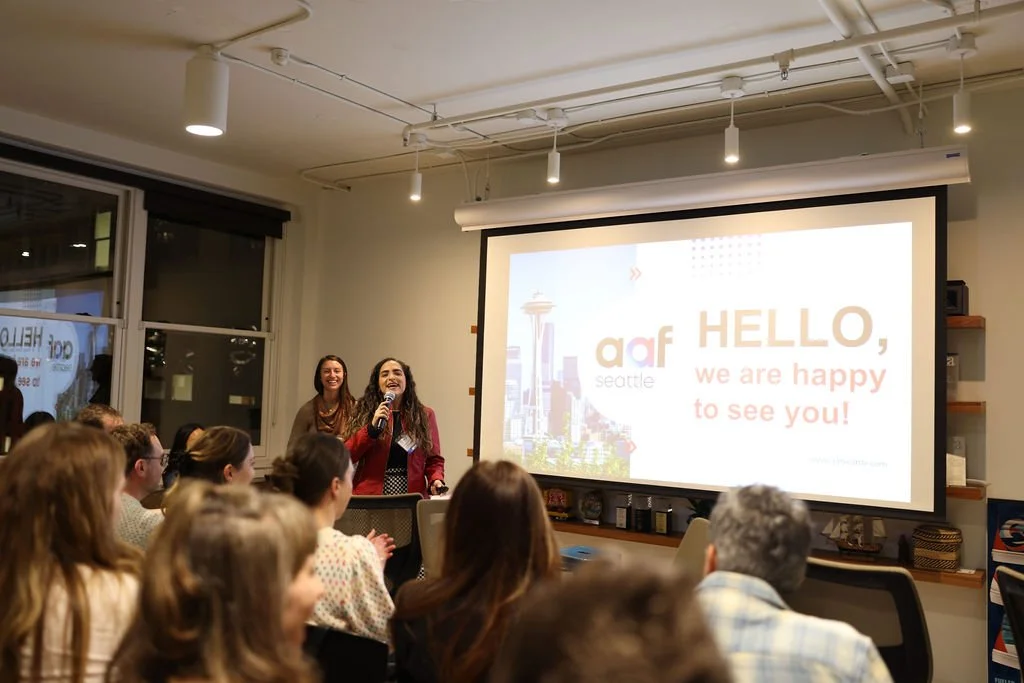
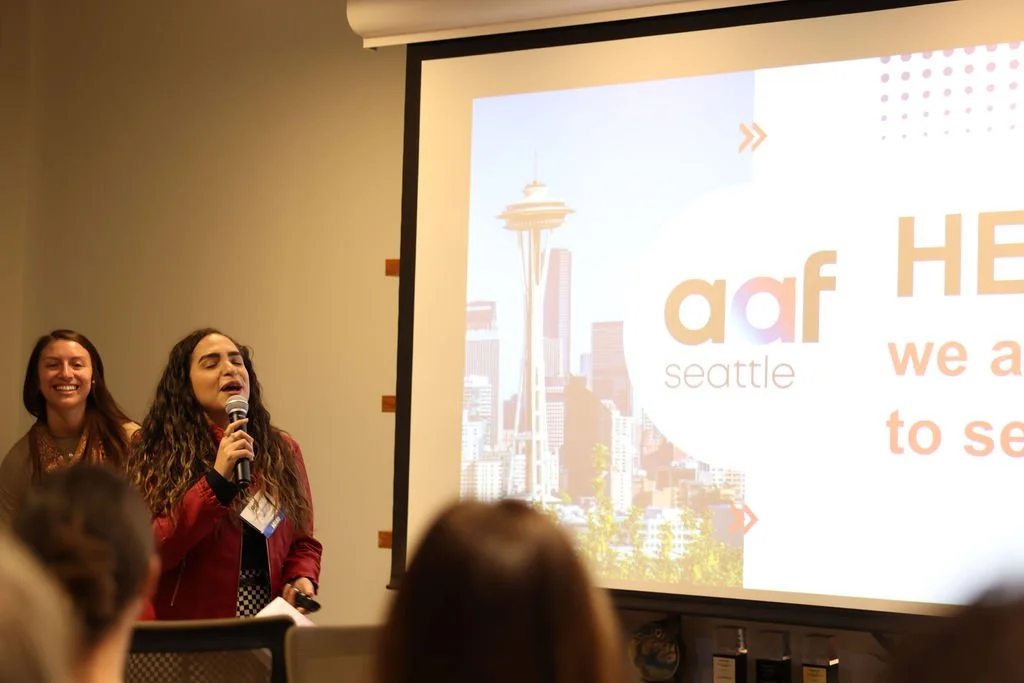
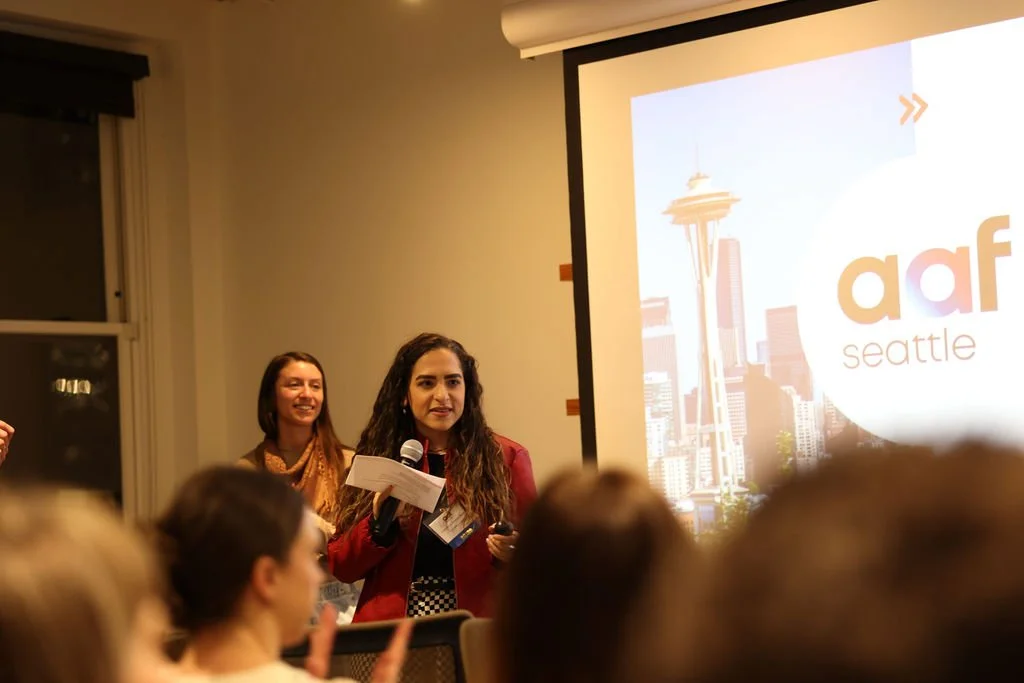
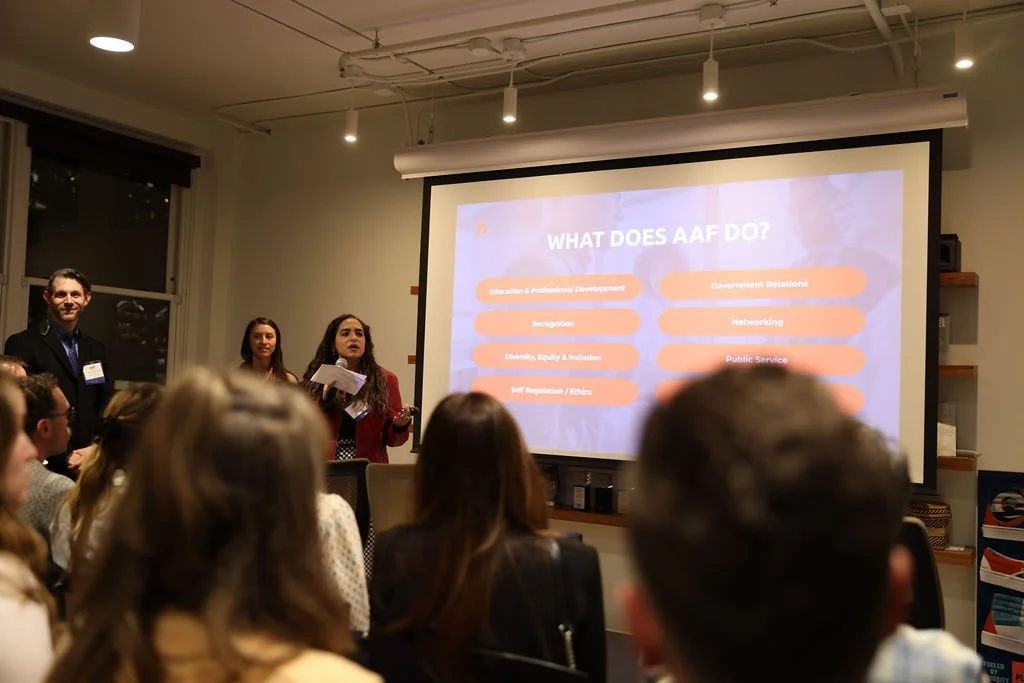

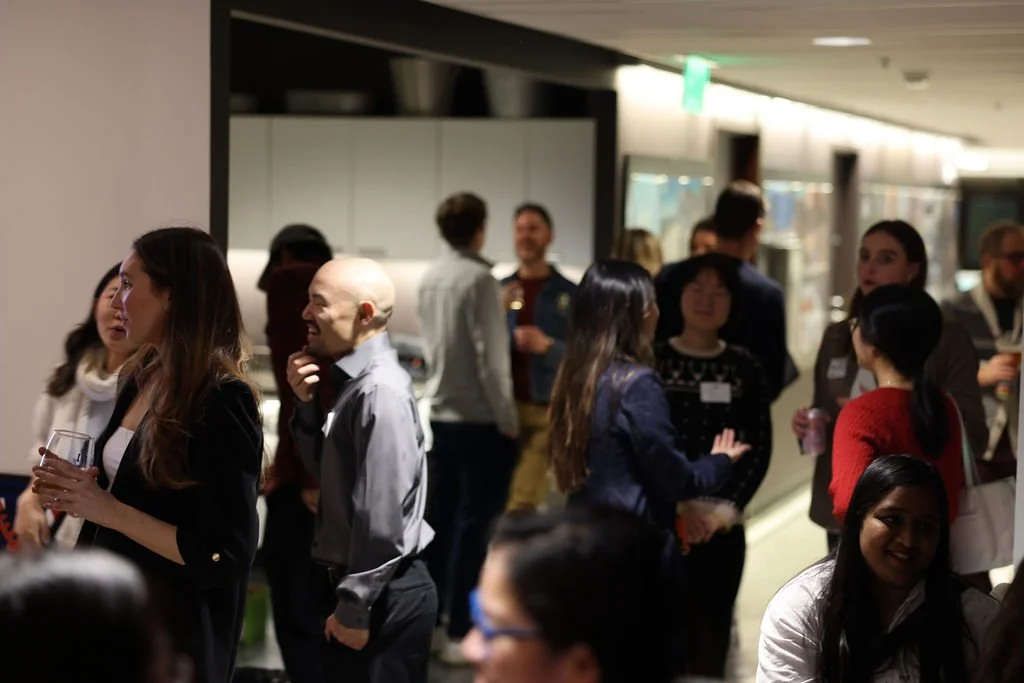
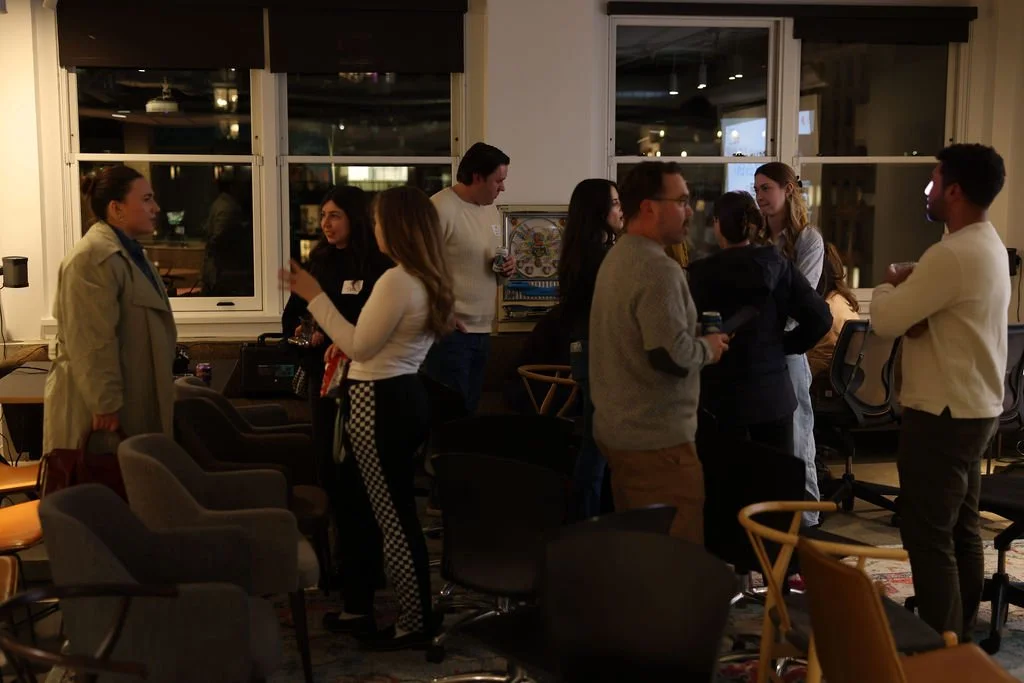
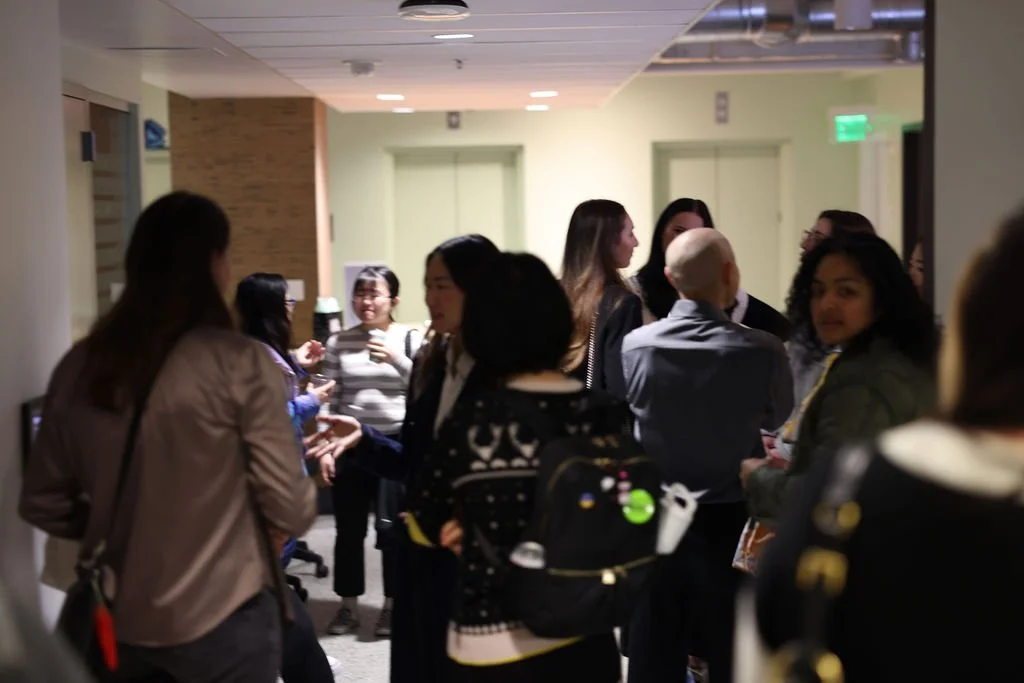

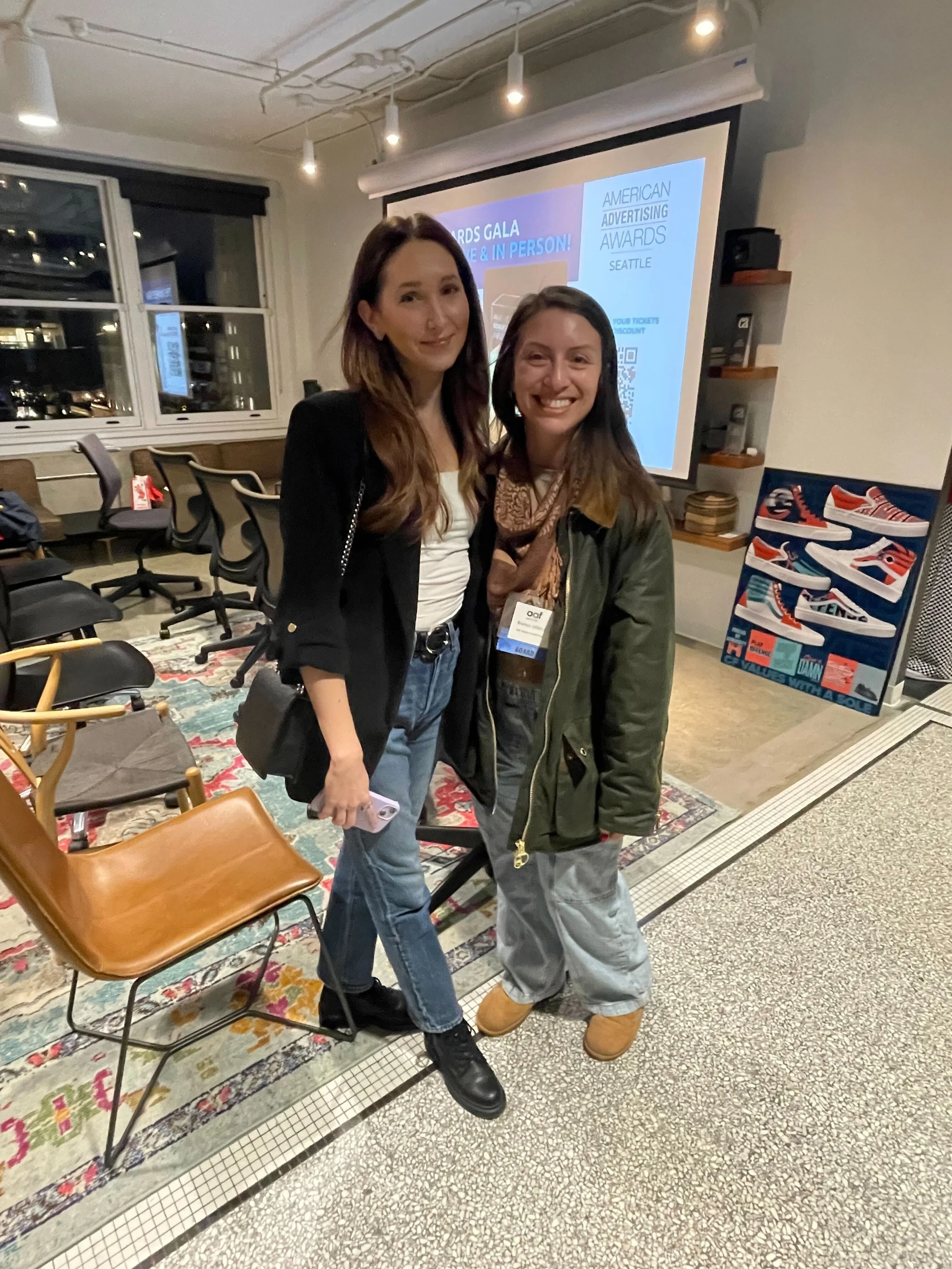
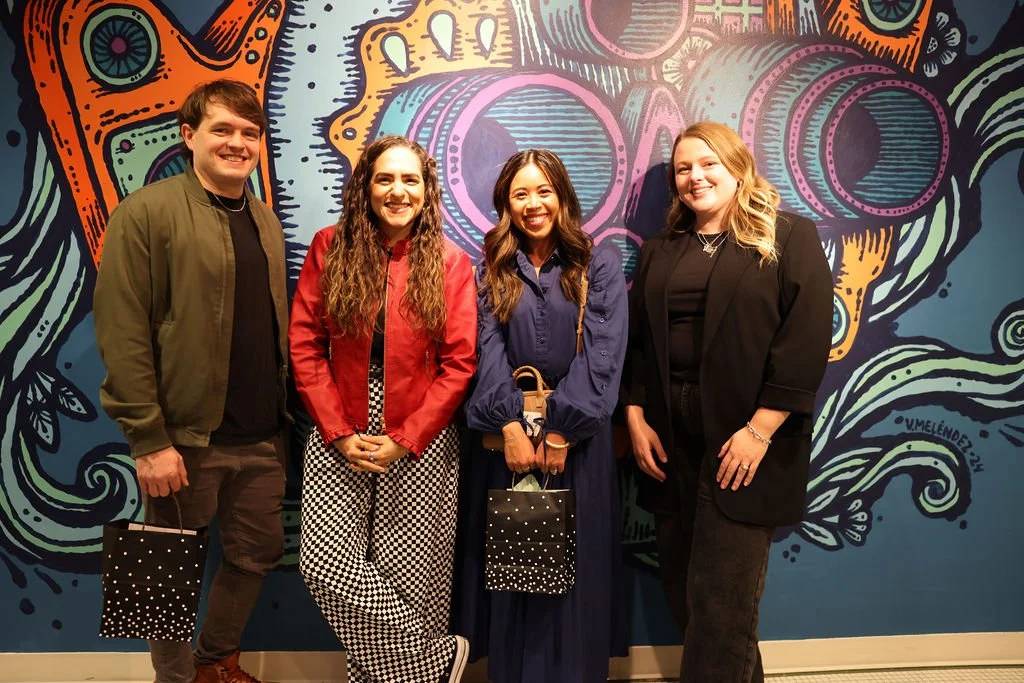

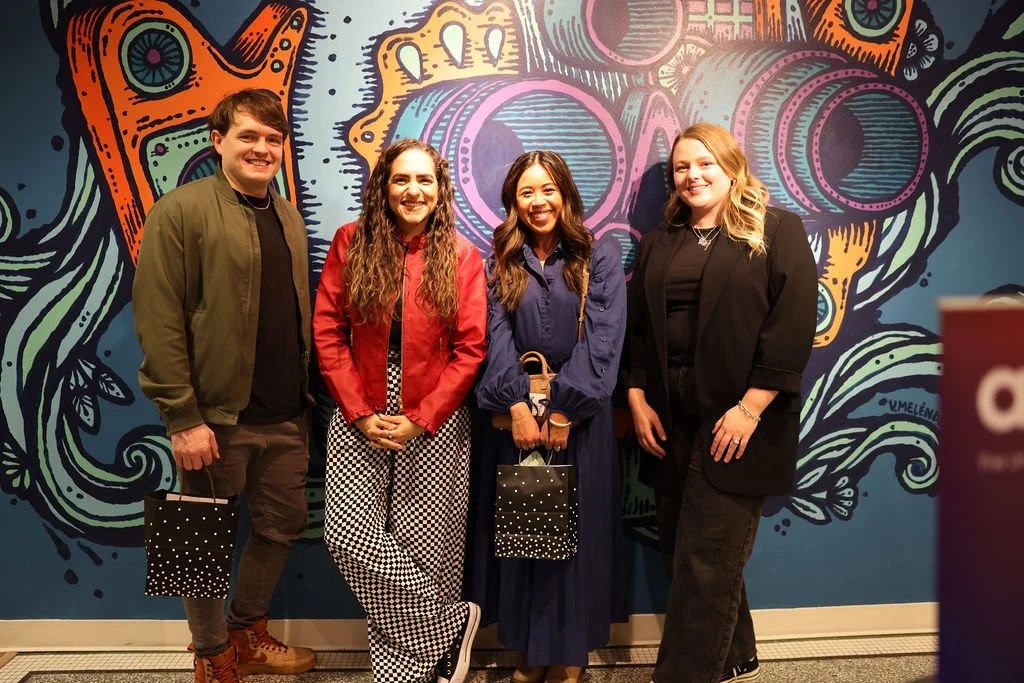
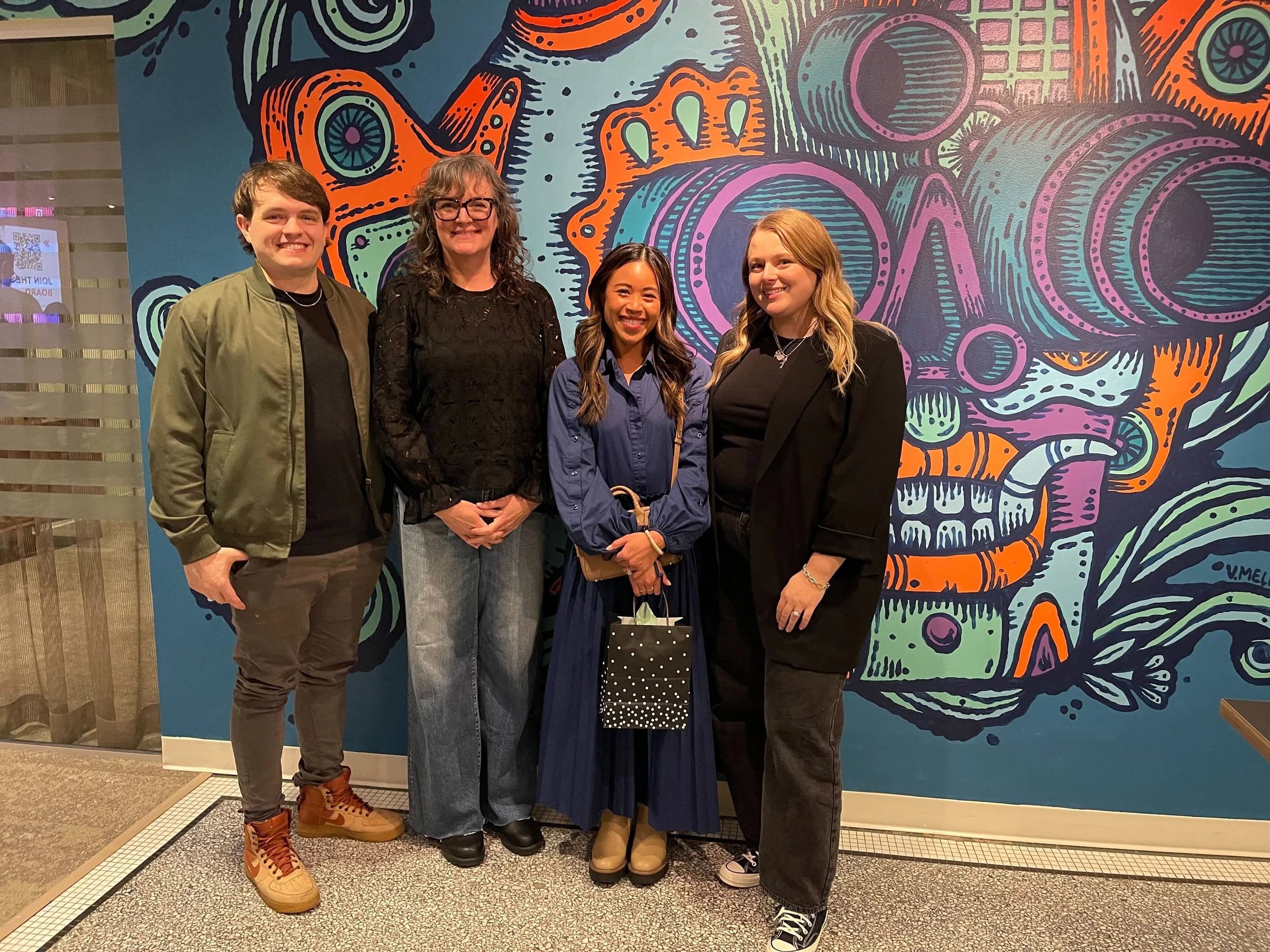





Announcing the AAF Western Region's 2021 Best of the West Media Awards
The AAF Western Region has a new, alternate awards show…
We’re helping to promote a new awards series hosted by the AAF Western Region which recognizes exceptional work and service to community, happening six months away from the American Advertising Awards.
We’ve moved the rest of this story to a dedicated Best of the West page in our Awards section.
2018 National American Advertising Awards Results
Seattle agencies took home two Gold and four Silver ADDYs at the 2018 national competition!
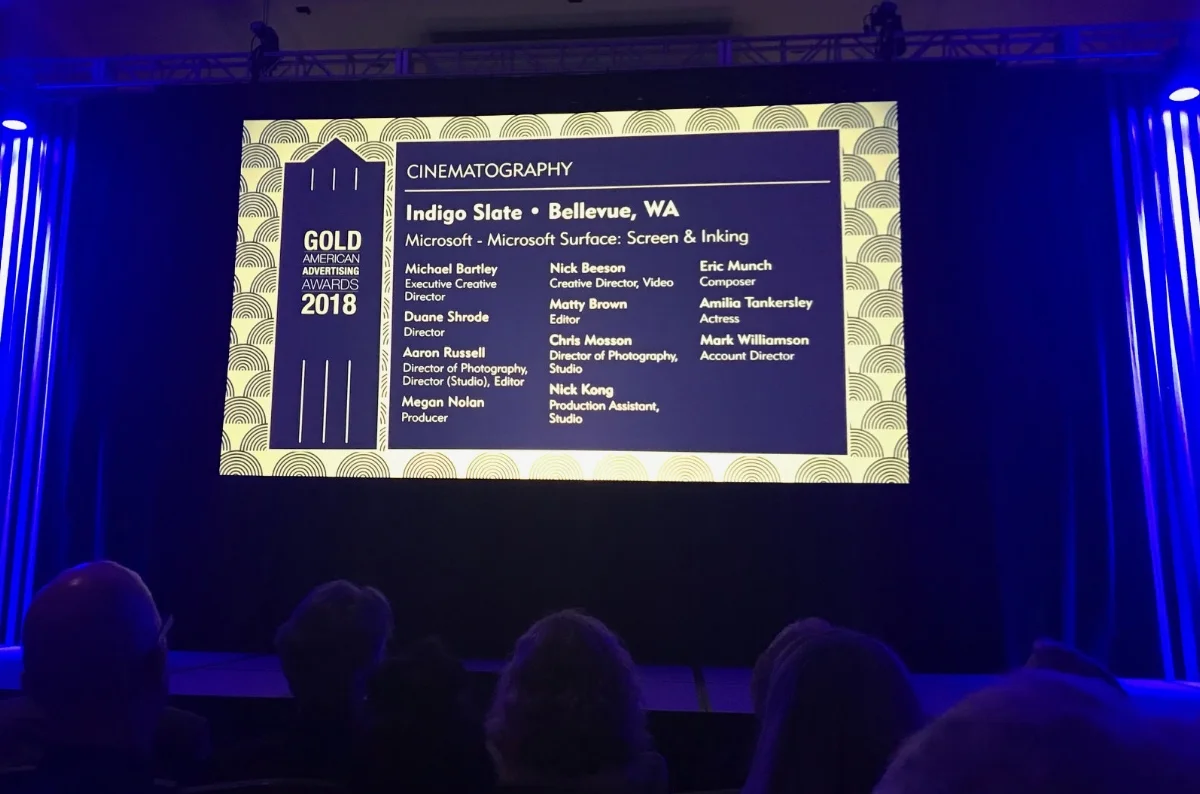
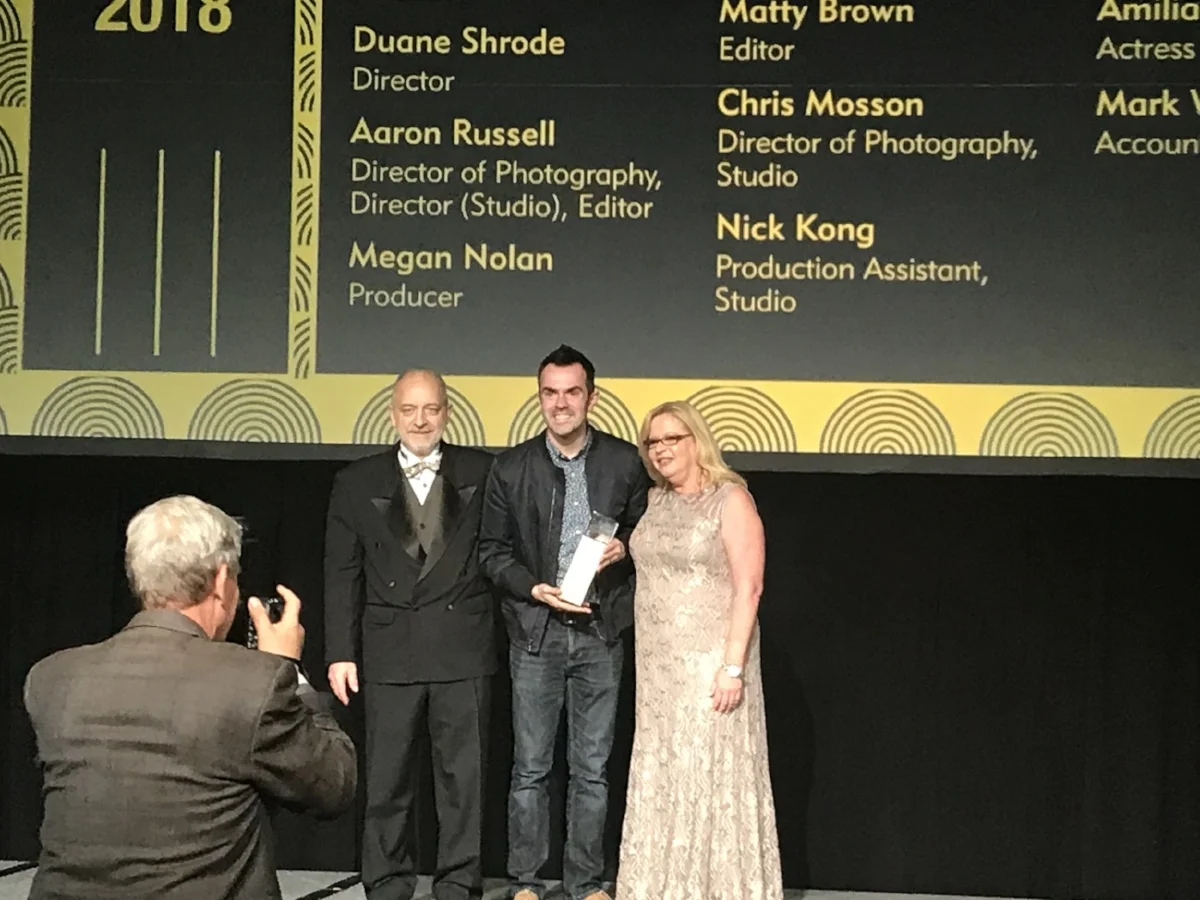
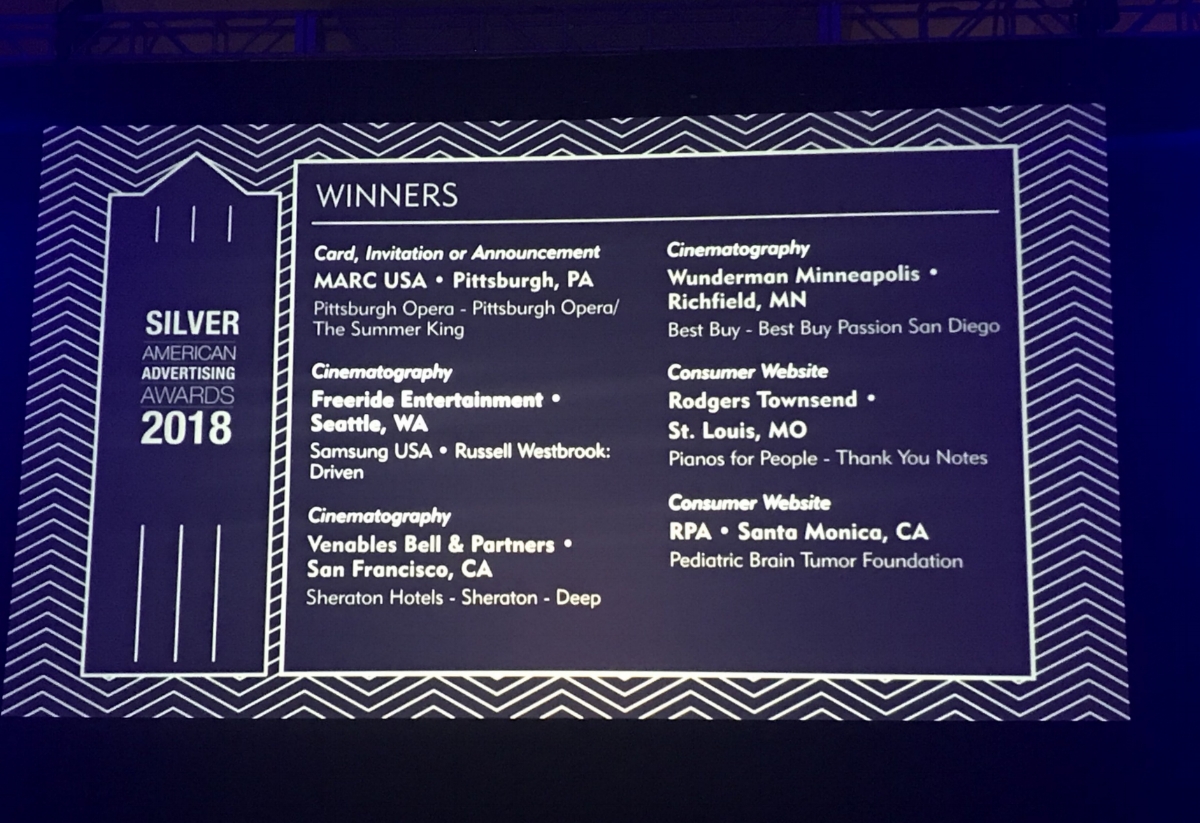
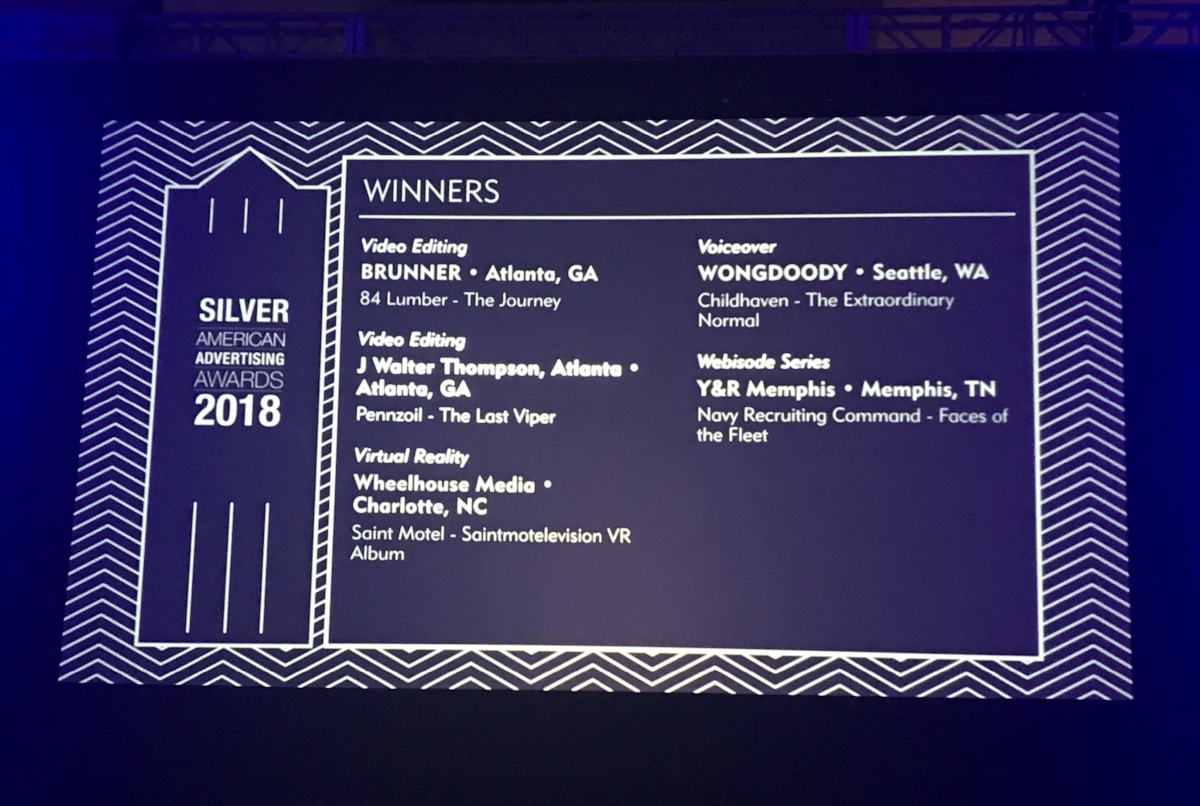
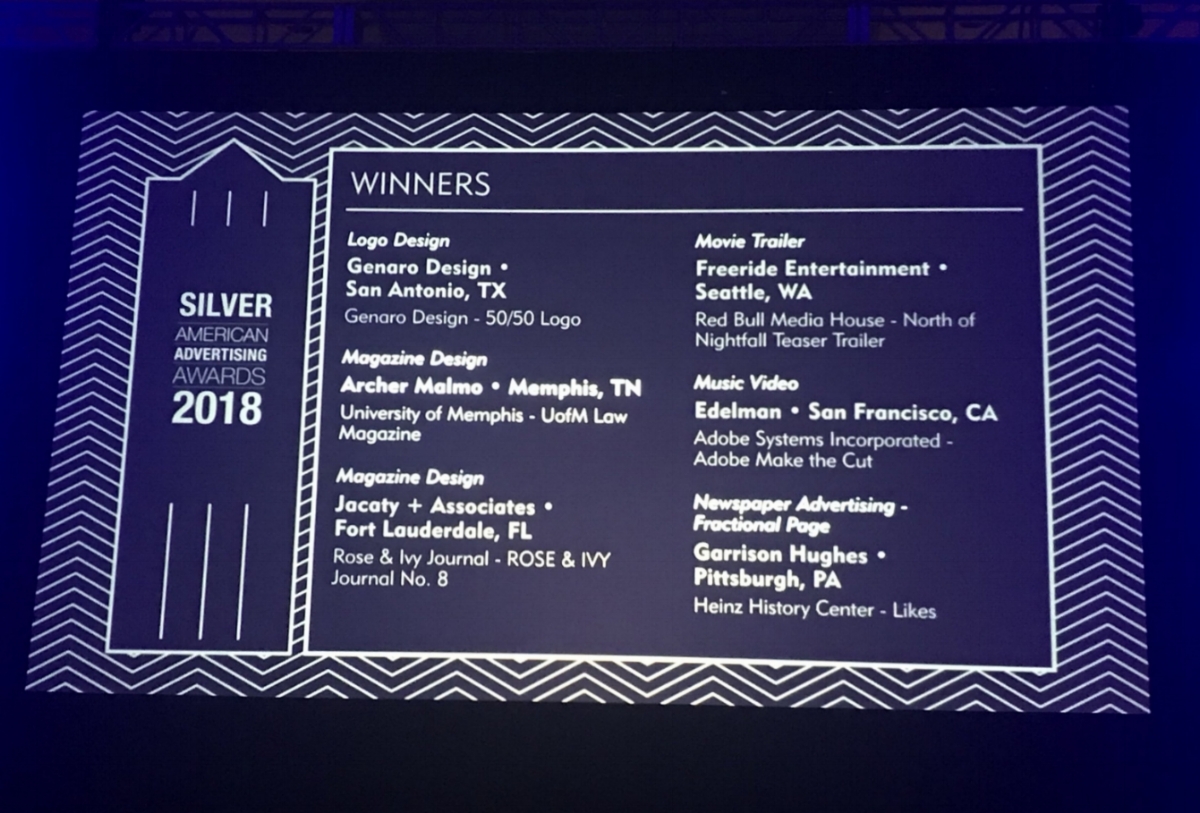
The 2018 National American Advertising Awards were held June 8th in Chicago as part of the American Advertising Federation's AdMerica annual national conference.
We sent a few board members out to learn from their peers at the conference and to cheer on local entrants at the award show.
Entries begin their journey in local shows, with winners moving on to district competition, and those winners then compete at the national level. It's quite an accomplishment to be awarded at any level, but to get national recognition is truly significant.
Seattle made an impact again this year, winning multiple ADDYs including Golds for POSSIBLE and Indigo Slate, and a student Gold for Mariah Behrens.
Congratulations to all the 2018 winners from western Washington!
Gold: Cinematography
Indigo Slate • Bellevue
Microsoft - Microsoft Surface: Screen & Inking
Gold: Integrated Media Public Service Campaign
POSSIBLE • Seattle, WA
Lonely Whale Foundation - Strawless Ocean Campaign
Silver: Cinematography
Freeride Entertainment • Seattle
Samsung USA - Russell Westbrook: Driven
Silver: Public Service Ambient Media
POSSIBLE • Seattle
Lonely Whale Foundation - SuckerPunch
Silver: Movie Trailer
Freeride Entertainment • Seattle
Red Bull Media House - North of Nightfall Teaser Trailer
Silver: Voiceover
WONGDOODY • Seattle
Childhaven - The Extraordinary Normal
Student Gold: Magazine Design
Mariah Behrens, Seattle Central Creative Academy • Seattle
LOIS magazine
Student Silver: Website (Desktop or Mobile)
Alessia Pizzoccheri, Art Institute of Seattle • Seattle
Papier Machine Official Website
You can view the entire list of winners at the national American Advertising Awards site

Judging Las Vegas
Our Communications Director reports on what it's like to be an ADDY judge, and exemplifies how being involved in the AAF grows your network, your experiences, and your opportunties…
Our Communications Director, Luis Antezana, reports on what it's like to be an ADDY judge, and exemplifies how being involved in the AAF grows your network, your experiences, and your opportunties…


Vegas.
The American Advertising Awards.
Judging people’s creative work.
All things I really enjoy.
That’s what was in store when I agreed to serve as a judge for Las Vegas’s ADDY Awards last weekend.
The details that go along with the premise of such an experience just sweeten the deal:
Air travel. Meeting new people. Establishing a team dynamic. Experiencing creative in another market. Rewarding great work. Revisiting, respecting, and upholding professional standards.
Serving the American Advertising Federation.
Eating somewhere new on someone else’s dime.
It all started as strangers introducing themselves at the Western Region Conference at Snowbird resort last fall. As anyone who’s sat with the same people through a weekend of seminars knows, you develop a gut feeling for someone’s capacities. And whether you’d like to ever see them again.
While I’ve told myself their original choice must have backed out, I was honored to receive the call from AAF Las Vegas. Their hospitality was gracious and the process went amazingly smoothly. My fellow judges were true pros, and fun to hang out with, both during and after judging. (Enough said on that part).
Judges dinner with AAF Las Vegas crew kicks off the weekend
Winning an American Advertising Award can make a career, or cap one off, so agencies submit their very best work, hoping for that special recognition. Viewing others’ creative is always simultaneously humbling and inspiring. To judge it is truly a privilege.
Congratulations to the 2018 winners!
6:00 a.m. sunrise over Las Vegas as I depart

Seattle Interactive Conference 2017
SIC is back—and we've got a discount for our readers.
The Seattle Interactive Conference is back this October 17+18 for another series of amazing keynotes, sessions, workshops, and community, all focused around what's current in creative content and led by top minds from Seattle and beyond.
As a SIC partner, AAF Seattle is offering our community $100 off a conference gold pass when using code AAFANDSIC17. Buy tickets here.
Register early for our city's must-attend conference of the year!
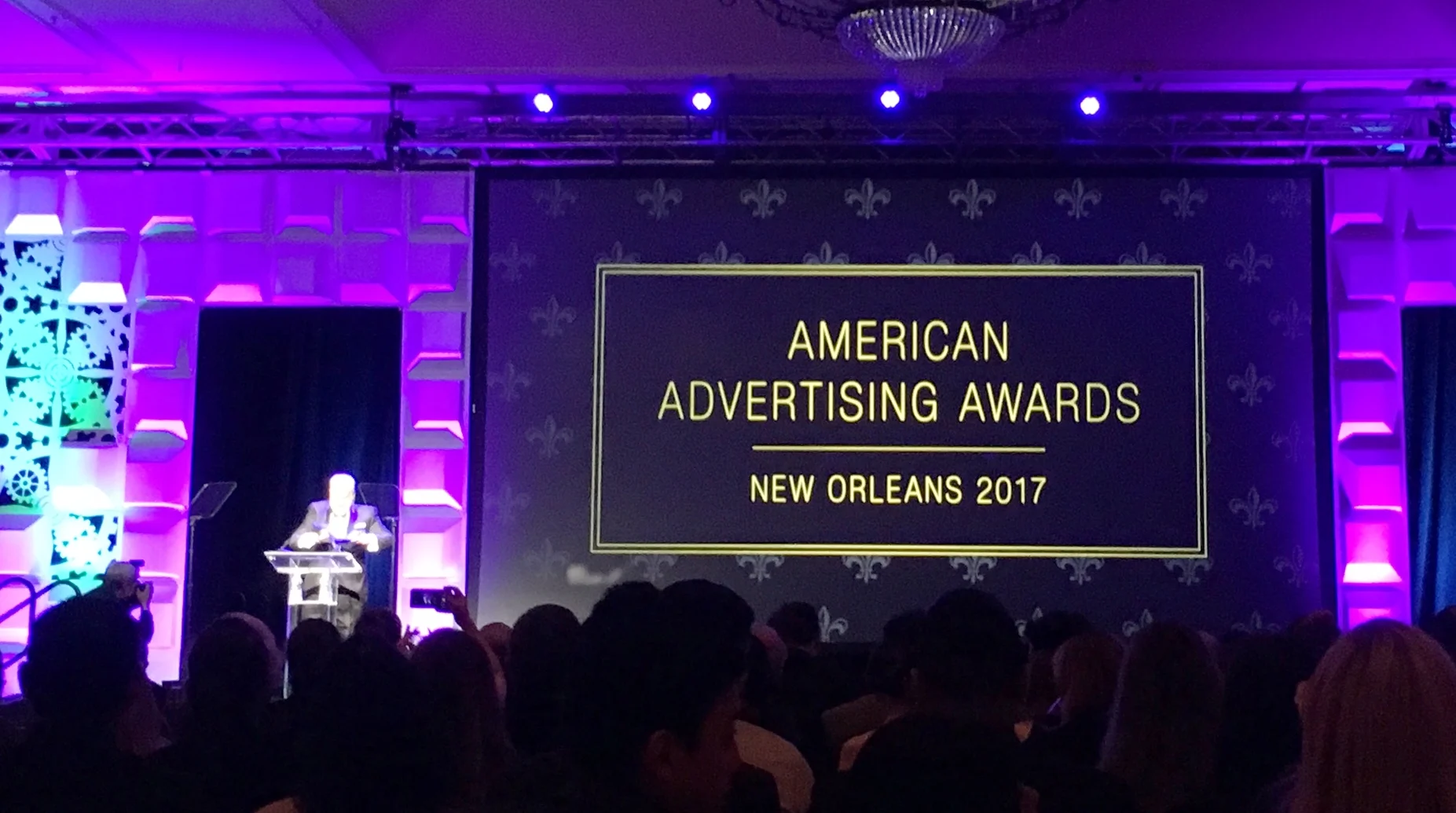
2017 National American Advertising Awards Winners Announced
Seattle represented well at the national ADDY Awards gala in New Orleans. Click through to see the glory.

One of the coolest parts of entering the American Advertising Awards is that the winning doesn't stop at the local level. Gold and Silver winners are eligible to compete at the District level (this year's results here), and those winners can move on to the national level.
This year's national competition was judged June 1st in Washington D.C., with the winners announced and recognized June 10th at the American Advertising Awards gala at the ADmerica conference in New Orleans. And boy did Seattle represent! Not only did we send several agency and student winners, but we took home an armful of awards, including two Gold ADDYs:
World Famous - Gold - Cinematography - Odesza - It's Only (feat. Zyra)
Wunderman - Gold - Integrated Media Public Service Campaign - Mountain Safety Research - Community Chlorine Maker
POSSIBLE - Silver - Integrated Advertising Campaign - Local - Consumer - The Summit at Snoqualmie - Office Rescue
POSSIBLE - Silver - Online/Interactive Branded Content & Entertainment - AT&T - Santa Live
Publicis - SIlver - Out-Of-Home Multiple Installations - Visit Seattle - Little Free Libraries
Tacoma Rainiers - Silver - Book Design - Tacoma Rainiers - Our House Is Your House
Wunderman - Silver - Data Driven Media - Microsoft - GamerCrest
Wunderman - Silver - Innovative Use of Interactive/Technology - Microsoft - Gamercrest
See the entire winners list, including the work for Best of Show, Judges Choice, and all Gold winners.
A huge congratulations to all the competitors and winners!
It's not too early to starting thinking about the 2018 American Advertising Awards Seattle. We will announce a call for entries in the fall for judging in February, with our awards gala in March 2018. Keep up the great work!
2017 District XI American Advertising Awards Competition Results
Judging for the next stage of ADDY competition—District XI—took place April 1. We've got the results!
Judges met April 1 in Seattle to decide the AAF District XI ADDY winners from creative work submitted by the local chapter competition winners in Washington, Alaska, Idaho, Montana, and Oregon.
With the stakes even higher and the pressure on, AAF Seattle's local ADDY winners scored high marks.
Professional Best of Show honors went to Wunderman Seattle for their “GamerCrest” entry for Microsoft.
A Professional Judges Choice Award went to Publicis Seattle for “Been There, Made That” entry for Visit Seattle.
District Gold ADDY winners automatically advance to the final national round of judging, while District Silver ADDY winners are eligible to advance.
Nationals Are Next
Judging to determine National ADDY Award winners will take place in Washington DC in early May. The National ADDY Award winners will be announced at the American Advertising Awards national gala at ADmerica on June 10 in New Orleans.
District XI Judges
This year’s judges:
• Jeff Martin - Executive Creative Director, Karsh/Hagan, Denver
• Steffan Postaer - Executive Creative Director, JUMBOshrimp, San Francisco
• Ryan Mastalerz - Associate Creative Director, Intel/Agency Inside, San Francisco
District XI Winners List
Full results are available in PDF format and include both professional and student results.